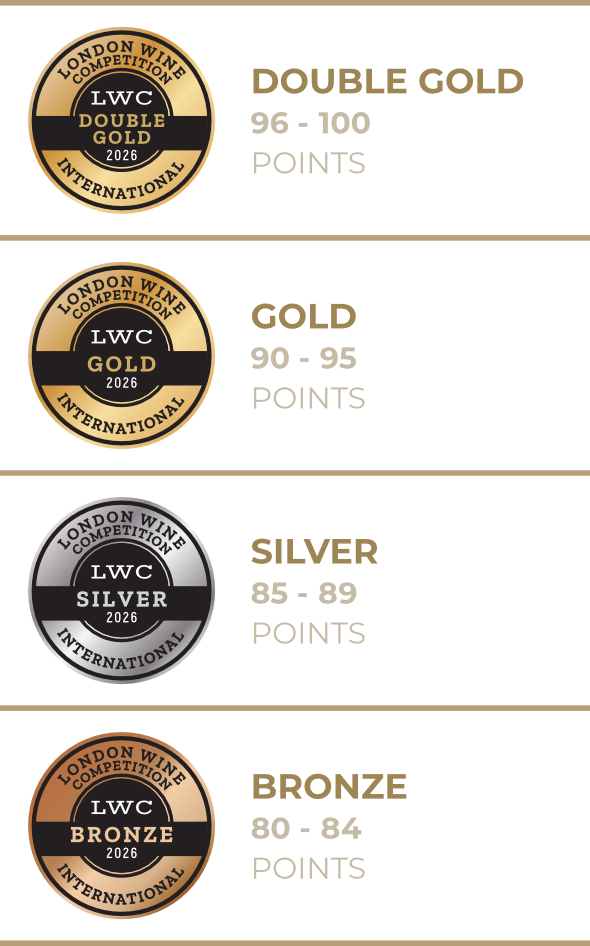
Early Deadline
30 November 2026
Judging
Date
22 & 23 March 2027
Winners Announcement
22 April 2027
30 November 2026
22 & 23 March 2027
22 April 2027

For a sommelier working in luxury hospitality, choosing a wine is never simply a question of whether it tastes good.
The wine must work with the food, fit the identity of the restaurant, make commercial sense, and offer the guest a reason to discover it. It must also be communicated in a way that creates confidence rather than intimidation.
Daniele Arcangeli, Head Sommelier and Wine Buyer at Great Scotland Yard Hotel London, has worked across some of the UK’s most demanding hospitality environments, including The Fat Duck, 67 Pall Mall, Angler and The River Restaurant by Gordon Ramsay at The Savoy. His experience spans fine-dining service, large-scale operations, wine buying, team development and international sommelier competition.
At Ekstedt at The Yard, where fire, smoke, fermentation and seasonal British ingredients shape the food, wine is part of a wider sensory experience. Arcangeli’s approach is therefore both precise and practical: understand the wine, understand the food, understand the guest, and make sure the entire proposition works.
Here, he discusses what makes a wine worthy of a place on a serious list, how fire changes the way he approaches pairing, and why the modern sommelier needs to do far more than demonstrate knowledge.
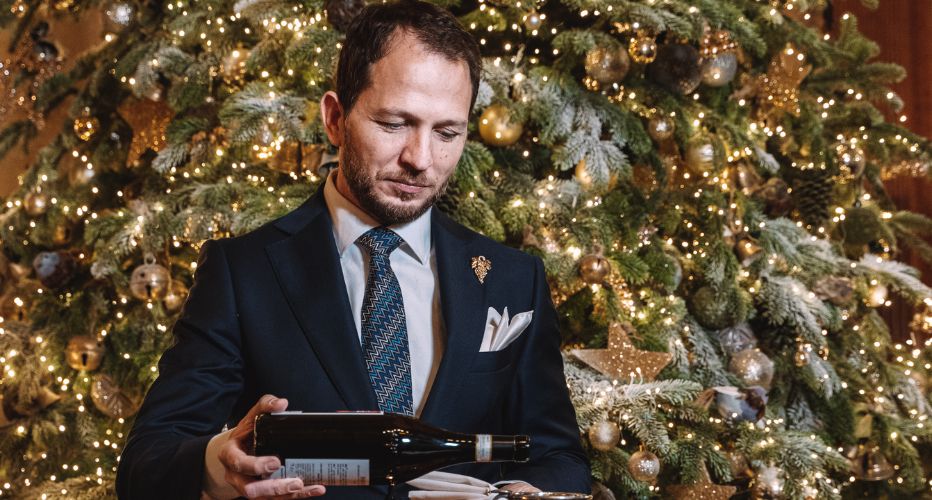
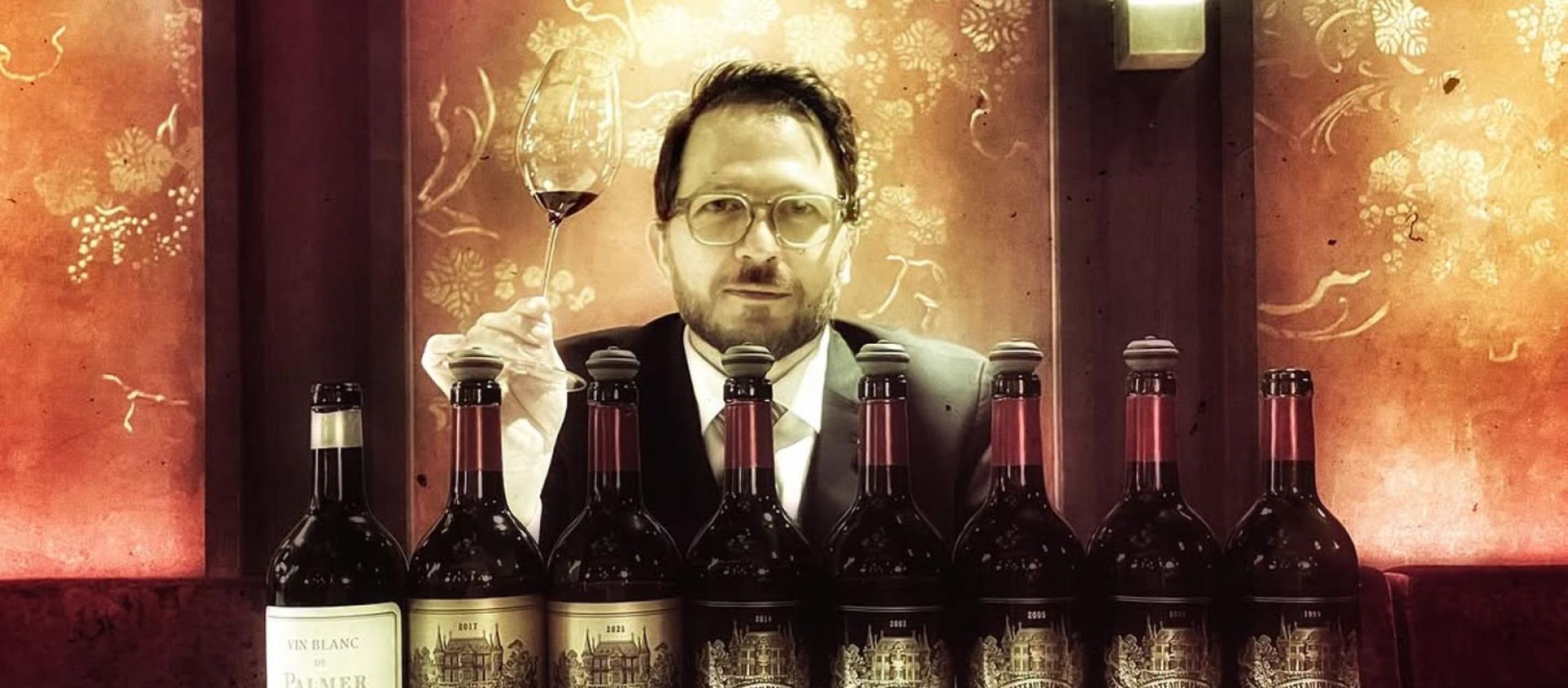
Image: Daniele Arcangeli
Quality comes first, always. I look for expression in the glass, typicity, personality, and a genuine sense of place.
Sometimes the connection with a wine starts immediately, almost from the moment it is poured.
The aromas, flavours, energy, and personality are there straight away. Other wines are more reserved or shy and need time and air to reveal themselves. I enjoy both experiences. What matters is that the wine eventually has something distinctive to say.
While I am tasting, I often picture the pairing straight away — which dish the wine could work with, what texture or flavour it could complement, or what contrast it could create.
I also want to understand the style of the producer and how they interpret their vineyard and origin. I am particularly interested in producers who respect the identity of the fruit and the place, where the vines are shaped by climate, altitude, aspect, soil and the wider growing environment, rather than covering those characteristics with winemaking technique.
The story behind the label is equally important. Behind every bottle there are people, families, vineyards, traditions, and years of work. That gives us something genuine to communicate to the guest. Storytelling should come naturally from the wine, the place, and the people who made it.
Then, as a wine buyer, I must consider the commercial side. Price point, value, profitability, and the opportunity to offer a wine by the glass are all very important. A wine may be excellent, but it still needs a clear role within the programme and must make sense for the business.
Presentation can also play a part. A distinctive bottle, label, or design can create curiosity and encourage a guest to discover something unfamiliar, although packaging can never replace what is inside the glass.
At Ekstedt, fire is not simply a smoky flavour. Depending on the technique, it can create caramelisation, char, bitterness, concentration, sweetness, texture and umami. We work with flambadou, charcoal, embers, birch, hay smoke and the wood-fired oven, while fermentation, curing and pickling add another layer of complexity and freshness to the dishes.
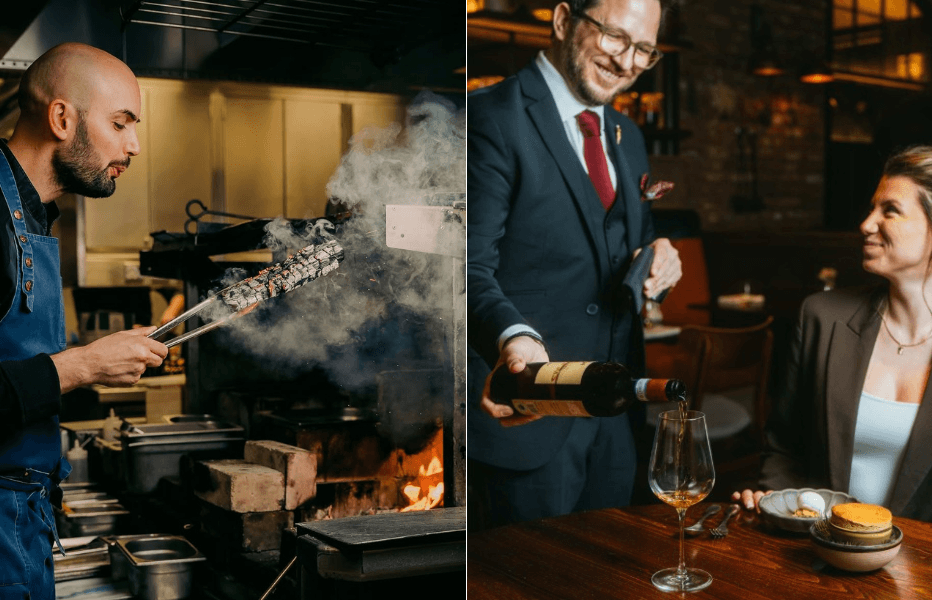
Image: Ekstedt at The Yard.
Because of that, I am often looking for wines with precision, freshness, salinity and tension, rather than simply more power.
Complex, textured whites with lees ageing can be particularly valuable because they have enough depth to stand alongside the food while retaining definition and energy. I also find Champagnes with oxidative complexity extremely interesting: their savoury, autolytic and developed character can connect beautifully with smoke, roasted flavours and umami, while their acidity keeps the pairing vibrant.
For red wines, I tend to favour savoury, complex and layered styles, with freshness and structure rather than excessive extraction or weight. Mature reds can be especially interesting because their earthy, tertiary and savoury character can echo some of the flavours created by fire without dominating the dish.
The cuisine often combines richness with acidity and fermentation. Our Mangalitza pork, for example, is hay-smoked and glazed with smoked butter and chicken stock, but balanced by sherry vinegar, quince and fermented vegetables. The wine therefore has to respond not only to smoke and richness, but also to acidity, texture and the different layers within the dish.
Working with seasonal British ingredients also means that our pairings have to evolve with the produce and the menu rather than following a fixed formula. This is reflected in the two different pairing experiences we have created at Ekstedt.
The Four Seasons of Fire & Wine follows the rhythm of the kitchen and changes four times a year. The wines evolve with the ingredients, the season, the intensity of the dishes, and the different cooking techniques: spring is about precision and tension, summer about generosity, autumn about structure, and winter about depth, maturity, and evolution. The pairing is never static; it changes with the kitchen throughout the year.
From Place to Memory takes a very different approach. It is a comparative wine journey structured around nine wines and five chapters: A Sense of Place, Precision & Salinity, Texture & Evolution, Structure Through Time, and Memory & Longevity. After the opening wine, two wines are presented side by side with the same dish, allowing the guest to compare directly how terroir, grape variety, vintage, maturity, structure, and evolution can change the experience. We use smaller 75ml pours, which makes this comparative journey possible without making it too heavy.
So one pairing is driven by seasonality and the evolution of the kitchen, while the other is built around comparison, discovery, and understanding how place and time shape wine.
For me, the best wines with Ekstedt’s cuisine are not necessarily the biggest. They are wines with complexity, texture, savoury character, precision, salinity and tension — wines that can stand beside the fire while still bringing energy and another dimension to the dish.
Although I had already worked across Europe in respected fine-dining restaurants in France, Switzerland, and especially Italy, my home country, it was the UK that most strongly influenced my professional development and shaped the way I work today.
Each place challenged me in a different way, and I am extremely grateful for that. Each one gave me different tools and perspectives and, over time, made me much more confident in my role.
The Fat Duck was my first sommelier role in the UK and my first experience in a three Michelin-starred restaurant. It remains one of the most formative experiences of my career. The restaurant had previously been named the World’s Best Restaurant by The World’s 50 Best Restaurants, and the level of expectation was extraordinary. Everything was crafted with incredible attention to detail and precision, from the food and beverage pairings to the storytelling and the way the entire guest journey was delivered.
At the time, the tasting menu was around 14 courses, and the guest experience could last five or six hours. Everything was highly personalised, with storytelling at the core. We worked not only with wine, but also spirits, sake, cocktails, teas, kombuchas and non-alcoholic pairings. It taught me that pairing is not simply about matching a wine to a dish; you must
understand flavour, texture, temperature, intensity and timing, but also how every element contributes to the overall experience of the guest.
67 Pall Mall was another place that strongly shaped me as a sommelier. We were a team of around 18 sommeliers from different parts of the world, including several national competition winners, and many were working towards qualifications such as the Master Sommelier or WSET Diploma. It was a demanding and stimulating environment, and we were constantly challenged on producers, regions, subregions, vintages and styles.
The wine programme itself was extraordinary, with around 5,000 labels and close to 1,000 wines available by the glass through Coravin. We were also tasting constantly, with producers visiting from all over the world. It was a real hub for producers, sommeliers, collectors and leading wine personalities such as Jancis Robinson, Steven Spurrier and Hugh Johnson. That experience broadened my knowledge enormously and taught me the importance of curiosity, humility and continuous learning.
Angler was another important stage in my development because it was my second Head Sommelier position in the UK. It was there that I became much more involved in the commercial and managerial side of the role: budgets, GP, suppliers, purchasing, wine selection, training and mentoring, as well as creating different pairings around Gary Foulkes’ dishes. It taught me how to balance quality and creativity with profitability, stock management and team development.
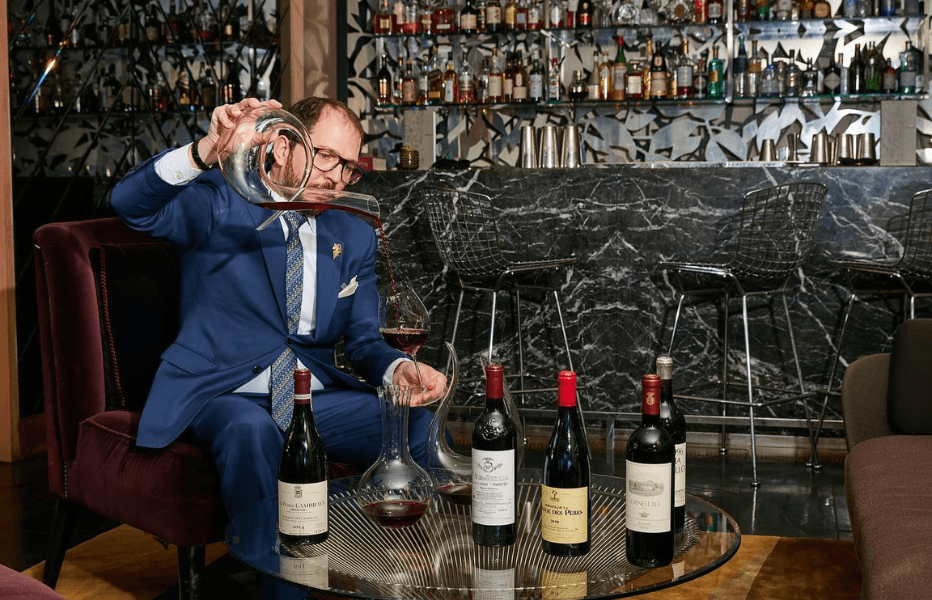
Image: Daniele Arcangeli at Angler (Source: Instagram page).
The River Restaurant by Gordon Ramsay at The Savoy taught me a different kind of discipline: precision at speed. We could serve around 200 guests per shift while maintaining a very high level of service. At that volume, it was impossible for me to personally reach every table, so training and mentoring became fundamental. The whole sommelier team, and increasingly the wider front-of-house team, had to understand the wine programme and communicate it consistently.
All of these experiences taught me that there is no single formula for a great wine list. It has to reflect the chef’s philosophy, the style of food, the identity of the restaurant, the level of service, the pace and volume of the business and, above all, the clientele. Some guests want recognised producers and classical regions; others are looking for discovery. A great list should be able to offer both.
The sommelier’s personality and vision should certainly be visible in the wine list, but it should never become a personal collection. Ultimately, it has to serve the identity of the restaurant and, above all, the guest.
When I believe a wine genuinely deserves to be discovered by our guests, I try to remove as many barriers as possible.
In fact, I often find it even more interesting when the wine comes from an unfamiliar grape variety, appellation, region or style. If it combines genuine quality, good value, drinking pleasure and a strong story, it can become very appealing. Storytelling creates curiosity, but ultimately the wine still has to deliver in the glass.
If I really believe in the wine, I might include it in a pairing or offer it by the glass. This allows the guest to discover it without committing immediately to a full bottle, while at the same time increasing cellar rotation and creating stronger sales opportunities. For me, that is an important part of building a healthy and dynamic wine programme.
Coravin helps enormously in this respect. It reduces wastage, allows us to offer more ambitious or expensive wines by the glass, and allows the guest to taste the wine before making a decision. With particularly expensive wines, we can also offer a smaller 75ml measure, making the experience more accessible and attractive.
The sommelier then becomes the bridge between the wine and the guest, and in some ways an ambassador not only for the individual bottle, but for the whole appellation or region behind it. With an unfamiliar wine, we have the opportunity to explain the place, the producer, and the style in a simple and engaging way, creating curiosity and giving the guest a reason to connect with something they may never have considered before.
When quality, value, pleasure, and storytelling come together, unfamiliarity becomes an opportunity rather than a barrier — for the guest, for the producer, and also for the business.
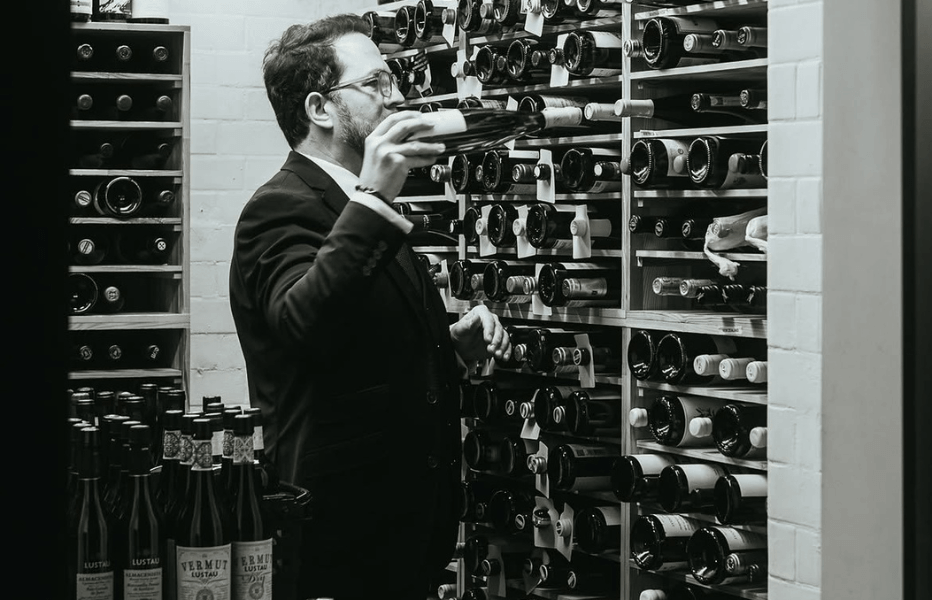
Image: Sommelier Daniele Arcangeli in the cellar at Ekstedt at The Yard.
Reading the table is fundamental. Every guest is different, and the sommelier has to understand very quickly how much information will actually add to the experience.
For me, the goal is to make wine simple to understand for everyone. Some guests are very curious and want to know about the producer, the vineyard, the vintage, the soil, or the winemaking. Others simply want a good glass or bottle of wine that they will enjoy, that complements the food and sits at the right price point. Both are completely valid.
I think sommeliers can sometimes become too academic. We spend years studying wine, but the guest does not always need all of that information. Storytelling should be adapted to the person in front of you. If they show interest, you can go deeper. If not, a few clear words about style, flavour, and why the wine works with the dish may be more than enough.
Ultimately, we work to create an experience and a sense of pleasure for the guest, and the connection we build with them is fundamental. Our knowledge should help us simplify wine, not complicate it.
The objective is not to show how much we know, but to understand the guest, create trust, and make them feel comfortable and confident in their choice.
Competition has played an important role in my development as a sommelier. Over the years, I have taken part in many competitions in Italy, reached several national finals, finished runner-up twice, and eventually won Best Sommelier of Italy in 2015. I also had the honour of representing Italy at the ASI Best Sommelier of the World competition in Belgium in 2019.
For me, competing has never really been about beating other people. It has always been about challenging myself, stepping outside my comfort zone and seeing how well I can perform under pressure.
Competition teaches you discipline, precision, and resilience. You have limited time, you are being observed, and you need to analyse, make decisions, and communicate clearly and confidently. In tasting, it taught me to be systematic, to trust the evidence in the glass and not to jump too quickly to conclusions.
What people perhaps do not always see is the amount of dedication behind competing. It requires a huge amount of preparation, concentration, organisation and resilience, particularly when you are also working full-time in a demanding restaurant. Much of the studying, tasting and training has to happen in your spare time, often before or after work, so you have to be disciplined with your time and remain focused even when you are tired.
In many ways, restaurant life prepared me very well for competition. During service, we regularly deal with demanding guests, difficult questions, important bottles, and situations where decisions have to be made very quickly while still maintaining composure and confidence. That pressure feels very real, and learning to manage it has helped me enormously when competing.
At the same time, working in restaurants has also changed the way I compete. It has given the technical side of competition a practical purpose. Wine is not simply an academic or technical exercise; ultimately, someone is going to drink and enjoy it. So alongside structure, origin and maturity, I naturally think about drinkability, food pairing, communication, service, and the overall experience a wine can create.
Competition has made me more precise, disciplined, and comfortable under pressure, while restaurant experience has made me more practical and more aware of the person on the other side of the glass.
I keep challenging myself because I strongly believe in never stopping learning. Even now, I still want to study, taste, improve, question myself, and continue moving beyond my comfort zone.
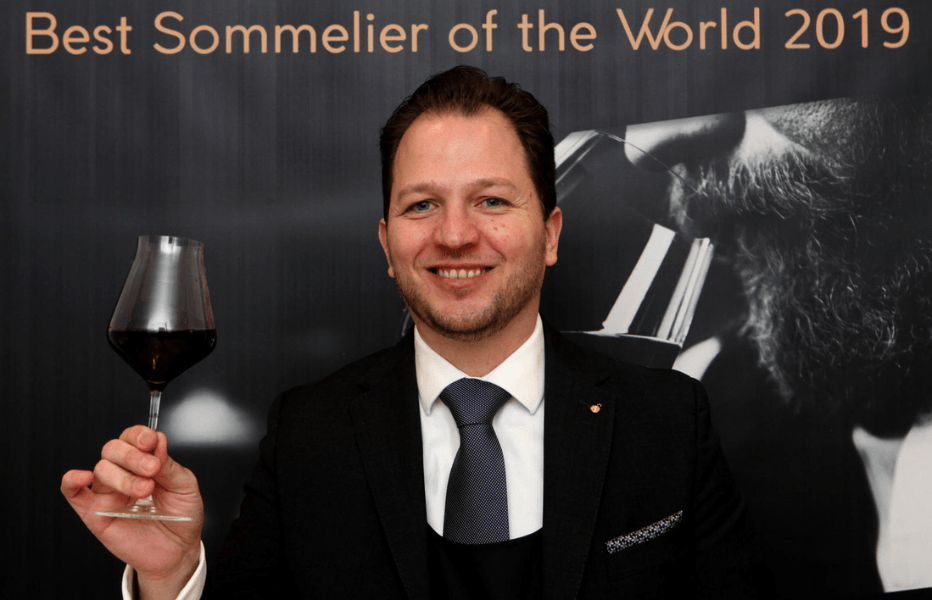
Image: ASI Best Sommelier of the World competition in Belgium in 2019.
A competition tasting gives you a very different perspective because it removes much of the context that can influence you during a supplier presentation. You are not being guided first by the producer’s story, reputation or commercial pitch; you have to concentrate on what the wine itself is actually delivering.
You assess quality, balance, drinkability and character, but also whether the wine represents good value for its price. Then packaging adds another dimension, because the bottle, label and overall design can strongly influence how a consumer perceives the wine before they ever taste it.
What I find particularly interesting is that you can also start to understand the wine’s commercial positioning: which price bracket it belongs in, what type of consumer it may appeal to, and whether it is better suited to a specialist wine merchant, premium supermarket, broader retail environment or perhaps the on-trade.
So you are not judging only whether the wine is technically good. You are assessing the complete proposition: Does it deliver quality? Is the price justified? Does the packaging communicate the right message? And is it positioned correctly for the market it is trying to reach?
That is something a competition can reveal very clearly, whereas in a supplier presentation you are often already influenced by the producer’s background, story and intended positioning.
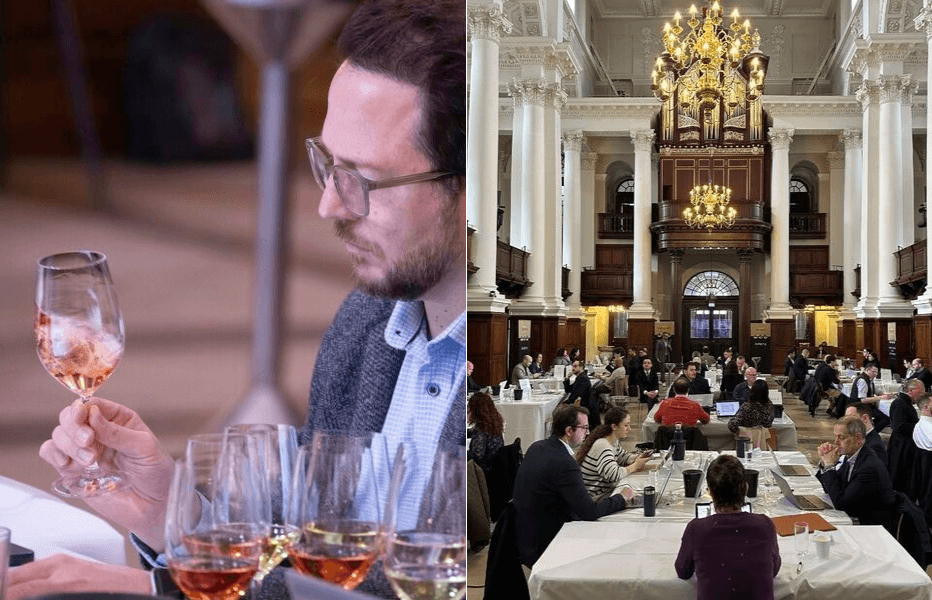
Image: London Wine Competition.
I think the industry sometimes sees the sommelier too narrowly, as someone whose role is simply to recommend wine at the table.
Guests today also have different expectations compared with years ago. The way we interact with them has changed significantly. They often look for more empathy, more connection and a more natural style of communication. They want to feel understood rather than instructed.
Knowledge, experience and expertise are fundamental, but the real challenge is knowing how to use them wisely and productively — in a way that improves the guest experience while also contributing to the commercial success of the restaurant.
A sommelier may know a huge amount about a wine, producer, region, or vintage, but at the table you often have only a few moments and a few words to make that information useful.
For me, that is one of the hardest parts of the job: condensing years of knowledge into something simple, clear, and engaging, without becoming too academic. The guest should never feel intimidated by wine or by the sommelier.
Most importantly, I always try to put myself in the guest’s shoes and ask myself: if I were sitting at this table, how would I like to be treated by the sommelier? Would I want a long explanation, a simple recommendation, to discover something new, or just to enjoy a good bottle without feeling under pressure?
At the same time, we are part of a business. Our knowledge and expertise should create pleasure and trust, but also help drive sales in a natural and intelligent way. Hospitality and commercial success should work together, not against each other.
And the role does not stop at the table. A strong sommelier should share knowledge, mentor younger members of the team, develop talent, and empower others. A great wine programme cannot depend on one individual.
For me, the modern sommelier is not defined only by how much they know, but by how well they use that knowledge: reading the situation, turning expertise into a few clear and meaningful words, making wine approachable, creating genuine connections and
memorable experiences, inspiring curiosity, and helping the people around them grow and develop.
[[relatedPurchasesItems-68]]
I genuinely love cooking. It is something I learned from my family and something that has always been part of my life.
For me, cooking is very personal. It connects me with my Italian roots, with memories of home, and with the simple pleasure of sharing food with other people. I enjoy the whole process: choosing ingredients, preparing them, tasting as I go, and bringing everything together.
And of course, a nice glass of wine and some good, relaxing music while I am cooking make the experience even better.
When I cook at home, I am not thinking like a sommelier. I am simply enjoying the moment.
In conversation with Malvika Patel, Editor and VP, Beverage Trade Network
Also Read:
Jeremy Lithgow MW Joins the 2027 London Wine Competition Judging Panel
The Judge's Glass: Irem Eren on Evaluating No & Low Without a Benchmark
Andreas Rosendal MS on What Makes A Wine Stand Out Today
The 2027 London Wine Competition gives every entrant greater feedback, transparency and commercial insight. Entrants will receive an expanded score breakdown, constructive feedback on how to improve, guidance on how to market and sell their wines, the names of the judges who tasted their entries, final feedback from the Head Judge and a Buyer Market Intelligence Report.
Enter your wines in the 10th edition of the London Wine Competition.