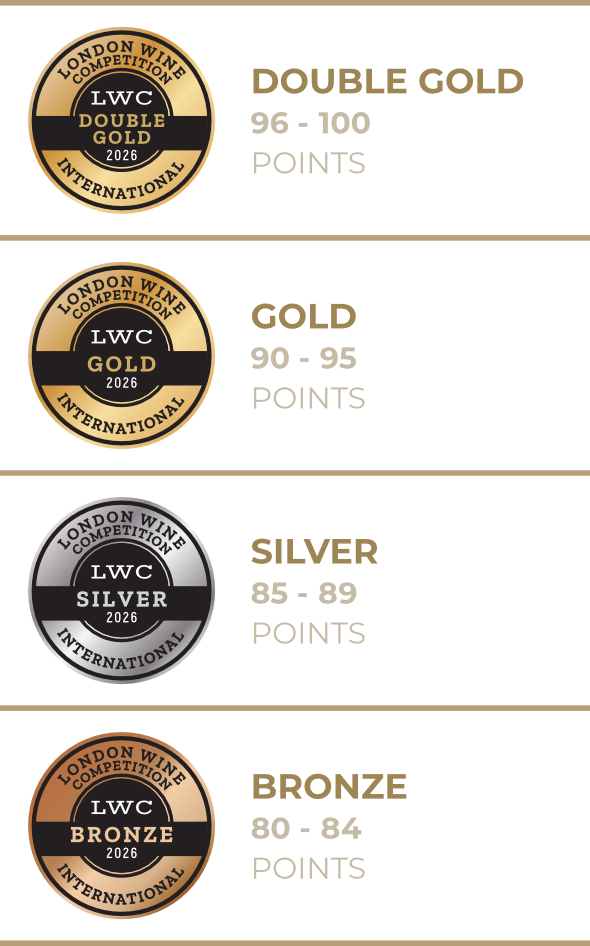
Early Deadline
30 November 2026
Judging
Date
22 & 23 March 2027
Winners Announcement
22 April 2027
30 November 2026
22 & 23 March 2027
22 April 2027

Andreas Rosendal MS represents the rare combination of deep technical knowledge, international restaurant experience, and a highly practical understanding of how wines perform in front of guests. As Sweden’s first Master Sommelier, his achievement reflects years of disciplined study, blind tasting, service expertise, and the resilience required to reach one of the wine world’s most demanding qualifications. His perspective is especially valuable because he connects excellence with real-world commercial relevance. For producers, importers, sommeliers, and buyers, wine is not judged by pedigree alone; it must deliver quality, value, consistency, and a clear reason to be chosen. In this interview, Andreas shares insights on what makes a wine stand out today, how professionals evaluate bottles beyond reputation, and why the strongest wines are those that can impress both expert palates and the consumers they are ultimately made for.
Becoming Sweden’s first Master Sommelier was a transformative milestone, and looking back, it’s been a pretty amazing journey. I remember when I passed my Advanced CMS exam and felt on top of the world, but from there to the MS was monumental. I suppose it ultimately comes down to precision. Having that deep understanding of how to evaluate structure, complexity, and typicity, and directly linking viticulture and vinification to what's in the glass. That technical depth has brought a whole new level of confidence to my evaluations.
As for the commercial side and leading my teams, I remain fundamentally the same, though doors certainly open up once you’ve passed. More opportunities for brand partnerships and wine collaborations become available, and allocations of certain wines are much easier to secure. Recruiting is smoother, too, though I’m still quite relentless in making sure the sommeliers on my team know their stuff and do their jobs properly, for better or worse.
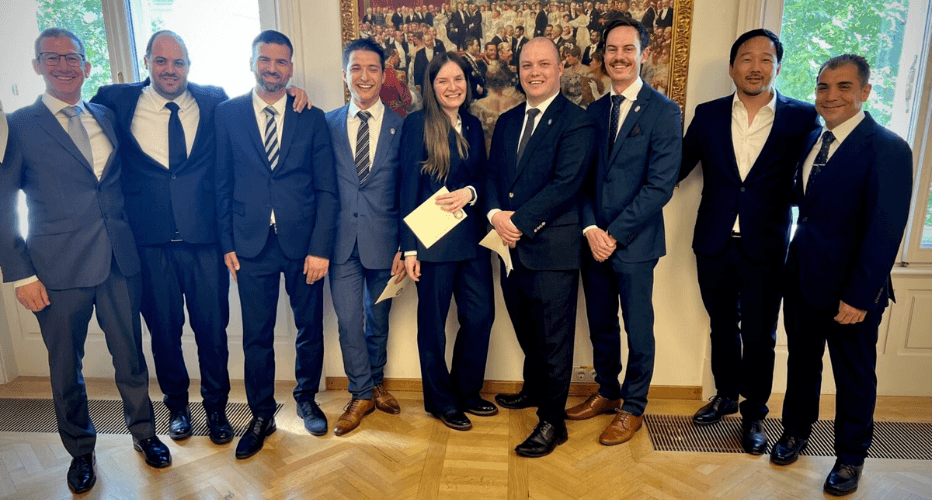
Source: The Court of Master Sommeliers
Allocation scarcity and FOMO seem to be working quite well nowadays. I am probably not the best person to ask, but if there is a common denominator that comes to mind, it is that the ones I would consider to be internationally successful today, not just in terms of sales, but also in reputation and image, rely heavily on their distributors and tend to work with the best. They have the right people to build the right relationships and position the wine effectively in the market.
It’s so subjective, isn’t it? You can have two stunning Pinot Noirs, both of equal technical quality and both costing £300, but one is from Burgundy and the other is from California. While a guest would probably be ‘happy’ to pay that price for the former, the latter might be a harder sell. So, we have to accept that there isn’t always rationality when choosing a wine. Is a Romanée-Conti 100 times better than one from Rochioli Vineyard? Of course not, but is it also true that the latter can be worth the price in certain vintages? Definitely!
In terms of sourcing wines, we always used to taste the classics blind as a team. If we were looking for something like a Chablis, we would get in 3 to 5 samples at our desired price range and decide which had the highest quality for the best price. That’s how we offer the best value to our guests.
On the other hand, some wines need to be explained to be fully understood, which is why it is always a pleasure to welcome suppliers and producers who are eager to showcase their portfolios. While we would come to the same conclusions most of the time, sometimes we would not. And if someone still wanted to list a certain wine that we as a team were less enthusiastic about, I would always say yes. But the sommelier would also take responsibility to make sure we had rotation on those wines and not tie up cash unnecessarily. But it is also worth mentioning that those wines were often the ones our guests appreciated the most, because the sommeliers spoke about them with such incredible passion.
Arriving late is one thing, but showing up unprepared is also quite common. Sadly, too often do I see someone leaning into their spec sheets, making everything feel a bit impersonal and too technical.

Source: Italian Wine Podcast
I would argue that all of these elements play an important role, though their impact varies significantly between the two sectors. For retail, eye-catching packaging can be vital because a wine on a crowded shelf must find a way to stand out. Domaine Ott is an excellent example and a true pioneer of this approach, achieving massive commercial success from its iconic bottle shape. It’s a similar story with label design, though it can often be a double-edged sword. Some labels are a bit like Marmite; you either love them or hate them.
For restaurants, while a unique bottle design can be visually stunning, I find that it can be impractical to take on sometimes. In the past, I have tasted many excellent wines which we were not able to list, simply because their bottle could not fit into our storage racks and fridges. The same goes for closures that you can't use with Coravin, like Vinolok. It just makes the daily operation unnecessarily difficult sometimes. And as Sommeliers are, in a way, storytellers, the story about the wines, of course, becomes more important as well.
Rather than pointing to a specific wine region or variety, I believe there is a strong case to be made for the overall movement toward more restrained and balanced alcohol levels. Reversing the riper, high-ABV trend we have seen for so long. Given current consumer trends, retaining quality and typicity while offering a more balanced take on established styles is something I think will work very well commercially going forward.
They have to do the hard work and find those hidden gems. I am from the generation that remembers when Krug was available at £35 per bottle, and Lafite was less than £100, so it has been quite devastating to see prices rise the way they have. And while they still have a place on the list, it also forces us to look for alternatives elsewhere. Finding the unexpected is what makes our job so much fun.
There is also immense enjoyment to be had in wines the market overlooks. For instance, I remember very clearly staying away from the 2007 vintage in Bordeaux initially. Yet, in the years following its release, I found some very delicious, well-made wines that did not require extensive cellaring and cost 30% to 40% less than the hyped vintages that followed. Ultimately, building an exciting, well-structured wine list requires balance. The best lists follow a clear strategy: buying wines en primeur for the future, finding mature gems at auction for immediate use, maintaining strong supplier relationships to access allocation-only wines, and implementing a flexible, reasonable markup policy that ensures guests keep coming back.

Source: Star Wine List
Let’s be honest: in the past, non-alcoholic wines were pretty horrible. You would usually sell just one glass, and the rest of the bottle would go to waste, making it financially pointless to stock them in the first place. Thankfully, times have changed. Non-alcoholic options are now made with real quality in mind and are priced to reflect that. Sparkling teas, for example, are something I’ve come to love over the last couple of years. Expanding one's selection is actually a great way to upsell, and it is no longer just about ticking a box.
The same goes for unconventional wines. Especially for pairings, it can be great to introduce something unexpected. If the quality is there, then I am all for it. When it comes to alternative formats, I remain quite conservative and prefer a standard glass bottle, or a magnum for that matter (in a restaurant setting that is). I don't really see the value in half-bottles these days, and I find anything above five liters to be quite gimmicky. However, I don't have an issue bringing a bag-in-box or wine in a can along on a picnic.
[[relatedPurchasesItems-68]]
I suppose it depends on the specific criteria that have been outlined by the competition, but I would say it's fairly easy to spot the ones that are worthy of a medal. When I sit on the panel for Italian wines, I just know there will be a varietal or region that I have never tried before. These would come in a flight of 8–16 wines, and when you do your initial sniff, you know which ones stand out straight away. And that's, for me, kind of the key. Does it stand out in a lineup? Is the nose attractive? Is there a complexity? Is it balanced and refined? If the answer is yes to all of the above, then it's definitely something I would reward, and quite possibly also add to my list.
Header image source: Star Wine List
Also Read:
The Judge's Glass: Irem Eren on Evaluating No & Low Without a Benchmark
How London Wine Competition Winners Drive DTC Sales and Wine Club Growth
The 2027 London Wine Competition gives every entrant greater feedback, transparency and commercial insight. Entrants will receive an expanded score breakdown, constructive feedback on how to improve, guidance on how to market and sell their wines, the names of the judges who tasted their entries, final feedback from the Head Judge and a Buyer Market Intelligence Report.
Enter your wines in the 10th edition of the London Wine Competition.