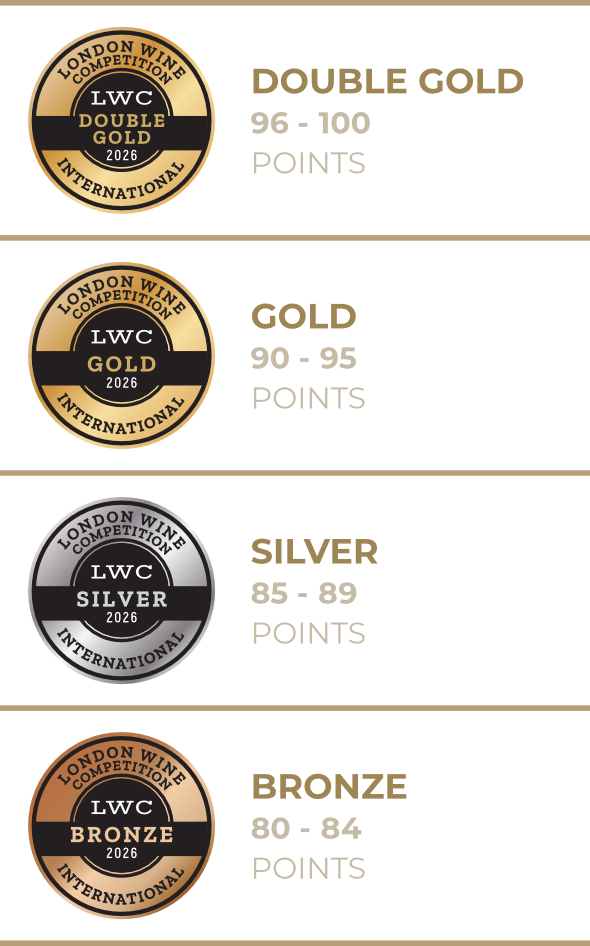
Early Deadline
30 November 2026
Judging
Date
22 & 23 March 2027
Winners Announcement
22 April 2027
30 November 2026
22 & 23 March 2027
22 April 2027
No & Low wine has moved past novelty status, but judging it fairly remains one of the hardest problems in the category — there's no Burgundy or Barolo to measure it against. Irem Eren, DipWSET, has built her career at the centre of that challenge, as Head of Sales & Market Development at BORN ROSÉ Barcelona and a Brand Ambassador for Solos Technology, working across production, category strategy, and international judging. In this interview, Eren takes us behind the glass: how the dealcoholization technique becomes a style decision, why "craft" tips into "correction," and what producers keep getting wrong about who they're actually building for.
Dealcoholization is not only a technical decision. It is a style decision, and it should start with the final wine profile the producer wants to achieve.
The question should not simply be, “Which technology is the best?” It should be: what is the base wine, what is the target ABV, what style are we trying to protect, and how much adjustment are we willing to do afterwards?
Reverse osmosis can be a very efficient method for alcohol adjustment, especially when a producer wants to reduce alcohol by one or two degrees. For example, if a wine is slightly too high in alcohol because of warmer vintages, reverse osmosis can be useful. But it is not ideal if the objective is to go to 0.0% alcohol. To reach very low levels, it requires several passes, which means time, cost, and significant water use. It also does not really recover the aromatic fraction in the same way as aroma recovery technologies. So, I see reverse osmosis more as an alcohol management tool than a complete no-alcohol wine solution.
A spinning cone column can go much further and can bring wine down to zero alcohol. It can also separate volatile aromas, but normally this requires two passes: first to capture the aroma fraction, then to remove the alcohol. One point to consider is yield loss, which can be around 30% depending on the type of wine and alcohol level. That has both economic and sensory impact. Economically, the producer loses volume. Sensory-wise, the remaining wine becomes more concentrated, so acidity, tannins, and phenolics can become more pronounced. If you start with a high-acid variety, the final wine can become sharper. If you start with a high and grippy tannin red, the tannins can become more aggressive.
Vacuum distillation is a broader family of technologies, and the result depends very much on the system used. Some vacuum distillation methods can be gentler, and some can separate different fractions in one pass. Yield loss can also be lower than spinning cone, for example, around 15% to 20%, depending on the process. That means there is less concentration of acidity and tannin, and producers have more room to work with different grape varieties and final styles.
For me, one of the most important points today is aroma recovery. In no-alcohol wine, we are trying to stay as close as possible to the wine category, not simply create a wine-based beverage. A beverage can be rebuilt with sugar, flavourings, and other ingredients. But if we want to create a credible no-alcohol wine, the goal should be to keep it as clean, vinous, and authentic as possible.
Aromatic compounds, especially esters, are closely linked with ethanol, so separating them from alcohol is technically difficult. A producer can remove alcohol, but if the aromatic identity is lost, the wine becomes hollow. This is why advanced aroma recovery systems are becoming so important. For example, technologies such as Solos are trying to address this challenge: not only removing alcohol but also recovering and reintegrating the aromatic fraction in a way that supports varietal character, origin, and terroir expression.
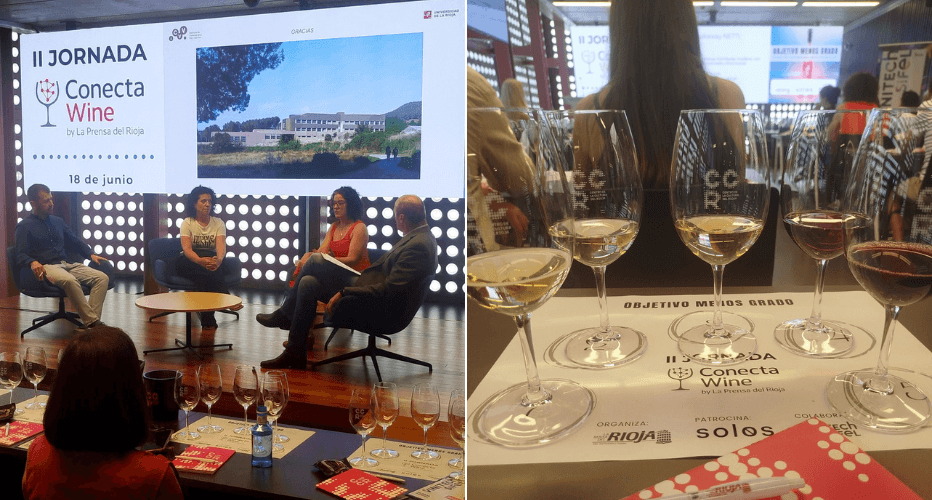
Image: Irem Eren WA, DipWSET, participated in a technical conference "Objective Less Degree. Processes, challenges and opportunities to expand wine consumption", held at the Centro de la Cultura del Rioja (CCR) in Logroño as part of Conecta Wine by La Prensa del Rioja, together with SOLOS Technology Iberia.
From an evaluator’s chair, I do not judge the technology alone. I judge the result in the glass. Does the wine still show varietal identity? Does it have freshness without being sharp? Does it have texture without tasting corrected? Does it feel like wine, or does it feel like a beverage built after the fact?
The best producers choose the technology according to the base wine, the target ABV, the desired style, and the final consumer occasion. The machine does not fix a weak base wine. The best no-alcohol wines are designed from the beginning, with the dealcoholization method and aroma recovery strategy already in mind.
To make a high-quality and authentic zero-alcohol wine, it is not only about the dealcoholization technology, but also about post-dealcoholization adjustment. For me, there are three parts: the base wine, the technology, and the post-adjustment.
The first part is the base wine. The best producers are becoming much more intentional here. It is not enough to take an existing wine, remove the alcohol, and then try to fix it afterwards. More experienced producers are now vinifying specifically for dealcoholization. Some are even starting earlier, with specific vineyard plots, grape varieties, and vineyard management decisions. This is not yet mainstream, but it is becoming more common as the category develops.
In the winery, many decisions can help build the wine before alcohol is removed. Producers may choose specific yeasts to lift the aromatic profile, decide whether to block or allow malolactic fermentation, use lees ageing or bâtonnage for texture, or apply careful oak ageing before dealcoholization. All these decisions can help create a base wine with more resilience, texture, and aromatic depth.
The second part is the technology. The gentler the dealcoholization process and the better the aroma recovery, the less adjustment is needed afterwards. If the wine loses too much aroma, body, or balance during the process, then the producer has to rebuild it. That is when the product can start moving away from wine and closer to a beverage.
The third part is post-adjustment. Even with a good base wine and good technology, some adjustment is usually necessary because alcohol gives wine body, texture, aromatic lift, warmth, perceived sweetness, and integration. When you remove it, you remove part of the architecture of the wine.
Post-dealcoholization, several tools can help: grape must or sugar adjustment for balance, lees contact for texture, controlled acidity adjustment, tannin management, oak alternatives or gentle oak influence, alcohol alternatives, carbonation for freshness and length, and in some cases, glycerol or natural flavour adjustments. For red wines especially, tannin softening can be important, and tools such as mannoproteins can help soften rough tannins and improve mouthfeel.
But the key is restraint. If the objective is to stay in the true no-alcohol wine category, the ideal is to use as few adjustments as possible and keep the product clean, vinous, and authentic. If we are working in the wider beverage category, then there is more room to be creative with flavour, sweetness, botanicals, or other ingredients. But for no-alcohol wine, the goal should be to protect the wine's identity, not cover its absence.
For me, compensation starts to feel like correction when I can taste the technique more than the wine. Too much sweetness makes the product feel like grape juice. Too much oak feels cosmetic. Too much aroma addition can create a beverage that smells attractive but does not taste integrated. Too much acidity without texture becomes sharp and tiring.
"Craft is when the additions are invisible. Correction is when the wine starts explaining its technical problems in the glass."
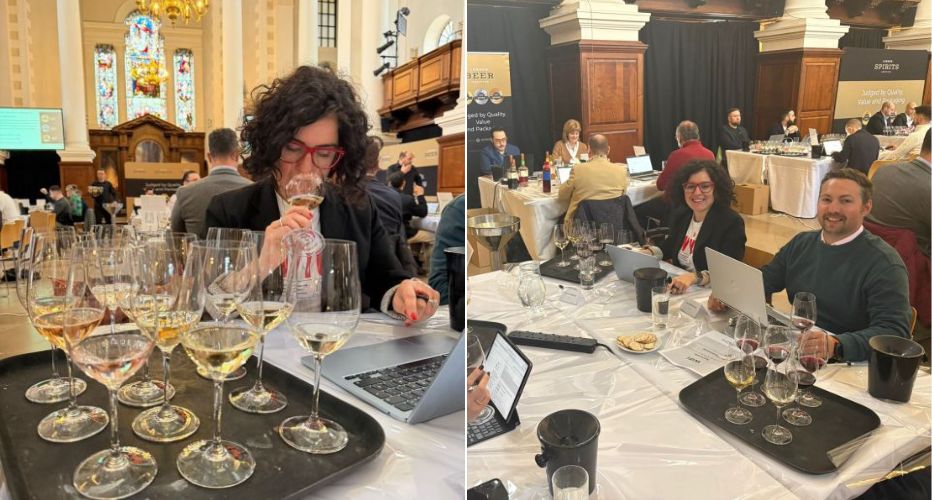
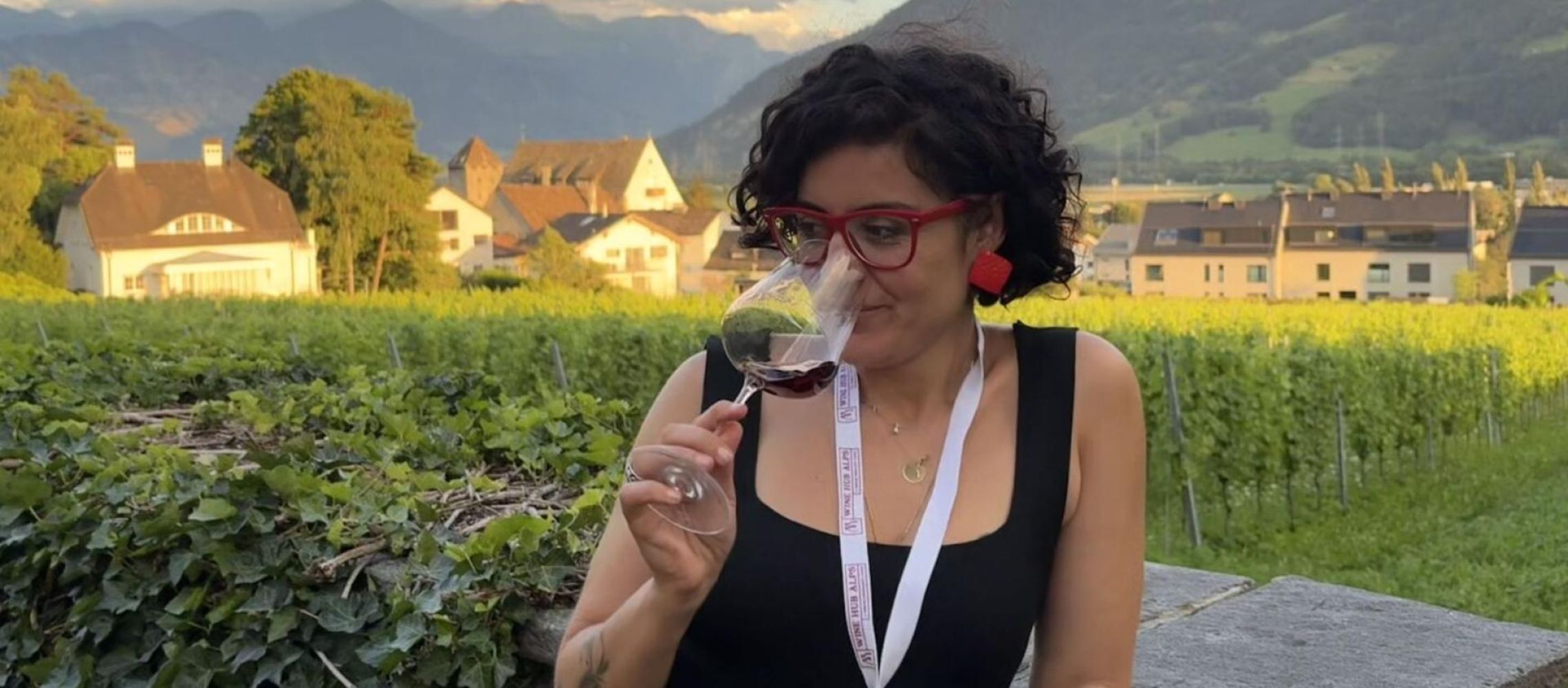
Image: Irem Eren, DipWSET at 2026 London Wine Competition.
This is one of the most interesting questions in the category. We can judge No & Low wines by pretending they are Burgundy, Barolo, or Champagne. But we also cannot lower the bar just because alcohol is missing.
When I judge, I look at balance, authenticity, technical precision, drinkability, and category intent.
Balance means acidity, sweetness, texture, aroma, and finish working together. Because alcohol is missing or reduced, balance becomes even more important. If the wine has no body, the acidity can feel sharp. If sweetness is used too heavily, it can feel like grape juice. If aroma is not integrated, the wine can feel artificial.
Authenticity means the product still has a credible relationship with wine: grape, origin, variety, fermentation, or at least a vinous structure. I am not expecting every No & Low wine to taste exactly like its full-strength equivalent, but I do want to feel that it belongs to the wine world, not only to the soft drink or flavoured beverage world.
Technical precision means no obvious faults, no cooked aromas, no stripped palate, no excessive volatility, no artificial finish, and no unpleasant fermentation-derived notes. In some alcohol-free products, you can find aromas that feel sterile, lactic, or slightly unfinished, almost like something between unfermented must and a technically corrected beverage. Those notes are very distracting.
The difficult part is that we cannot always rely on traditional varietal benchmarks. Dealcoholization can change the structure of the wine, especially depending on the process and the level of concentration created during alcohol removal. This is particularly relevant for reds, where tannins are involved.
For example, when I was in Rioja in June, leading a seminar on No & Low alcohol wines with Rioja winemakers, we tasted different varietal expressions of dealcoholized wines. The winemakers were impressed by the varietal expression, especially on the nose. In many whites, the varietal character was also still visible on the palate. But with reds, it became more complex. One dealcoholized Merlot showed a very pure, textbook Merlot expression aromatically, but on the palate, the tannin structure felt closer to Cabernet Sauvignon than to Merlot. For me, this shows that in No & Low, aroma, palate, and structure do not always translate in the same way as they do in full-strength wine.
That is why I think we need more specific judging frameworks for No & Low. The category is no longer a single block. It now includes alcohol-free wines, low-alcohol wines, mid-strength wines, wine-based RTDs, spritzes, sparkling teas and other adult alternatives. Some of these products have a clear reference point in wine. Others do not have an alcoholic benchmark at all.
I have also experienced this from the producer side. At Born Rosé Barcelona, where I am one of the partners, I was involved in the product development of an 8% low-alcohol rosé spritz made with a rosé wine base, botanicals, grapefruit, and hibiscus. For me, this is a good example of how creative the category is becoming. It is not trying to be a classic rosé-based product, and it should not be judged as one. It needs to be judged according to its own intention: is it balanced, refreshing, well-integrated, adult, repeatable, and appropriate for the occasion?

So, I always ask: what is this product trying to be, and does it succeed? Is it a youthful, immediate-consumption, alcohol-free wine? Is it a gastronomic no-alcohol wine for food pairing? Is it a more complex, layered no-alcohol wine? Is it a wine-based RTD designed for refreshment and accessibility?
Not every product needs to be complex. A simple, fresh, well-made product can be excellent if that is the intention. But if a wine is positioned as premium, gastronomic or complex, then I expect more: more concentration, more layers, more texture, more length, and a clearer sense of identity.
Drinkability is also essential. Do I want to take a second glass? This is especially important in No & Low because the consumer is often looking for refreshment, moderation, and repeatability. A product can be technically correct, but if it is tiring, heavy, too sweet, too sharp, or too short, it will not succeed.
For me, the future of judging No & Low is not about forcing everything into traditional wine benchmarks. It is about building more precise subcategories and judging each product according to quality, intention, and execution.
Producers often talk about “the No & Low consumer” as if it is one person. It is not.
This is one of the biggest misunderstandings in the category. The fully abstaining consumer is the smallest group. According to IWSR segmentation, abstainers represent around 17% of No & Low consumers. The rest is mainly concentrated across other groups: adventurous consumers, blenders, and substituters.
A fully sober consumer may be looking for trust, clarity, safety, and a genuine adult alternative. They often care about 0.0%, transparent labelling, and whether the product fits social occasions without pressure. For this group, the product has to be clear, credible, and reassuring.
A designated driver may be more occasion-led. They want something that feels adult, celebratory, and not like a compromise. Sparkling formats, aperitif styles, and good by-the-glass options work very well here. This consumer may not be avoiding alcohol permanently. They simply need the right product for that moment.
A health-driven consumer may focus on alcohol, calories, sugar, additives, organic credentials, or functional positioning. For this group, the producer needs to be careful. If a wine is alcohol-free but high in sugar, the positioning needs to be honest. The health-driven consumer is usually very sensitive to transparency.
Moderate drinkers are probably the biggest opportunity. They are not rejecting alcohol completely. They are choosing more flexibly: alcohol-free at lunch, low alcohol during the week, full-strength wine with dinner, a spritz at a social occasion. For them, the key is relevance. The product has to feel desirable, not medicinal.
This is where the IWSR-style segmentation becomes useful. Abstainers are important, but they are not the whole category. Adventurous consumers are curious. They are open to new flavours, formats and rituals. They may not be entering the category because they want to avoid alcohol completely. They may simply be interested in discovery.
Blenders are one of the most interesting groups. These are consumers who move between zero alcohol, low alcohol, and full-strength alcohol within the same occasion. I see this as the zero-proof crossing moment. At the same dinner, someone may start with a non-alcoholic sparkling, continue with a low alcohol option, and later have a full-strength wine, or the other way around. It is not linear anymore.
Substituters behave slightly differently. They choose No & Low depending on the occasion. They may drink alcohol on Friday evening, but choose alcohol-free at lunch, during the week, before driving, during a business event, after sport, or when they want to moderate. For them, the product has to fit naturally into the occasion.
This is also changing hospitality. Many fine dining restaurants are no longer thinking only in terms of wine pairings. They are moving towards beverage pairings, where wine, low alcohol, no alcohol, and other crafted drinks can sit together. A good example is Sven Wassmer's Memories in Switzerland, a three-Michelin-star restaurant where both wine and alcohol-free pairings are available. This shows that No & Low is also entering fine dining and gastronomy.
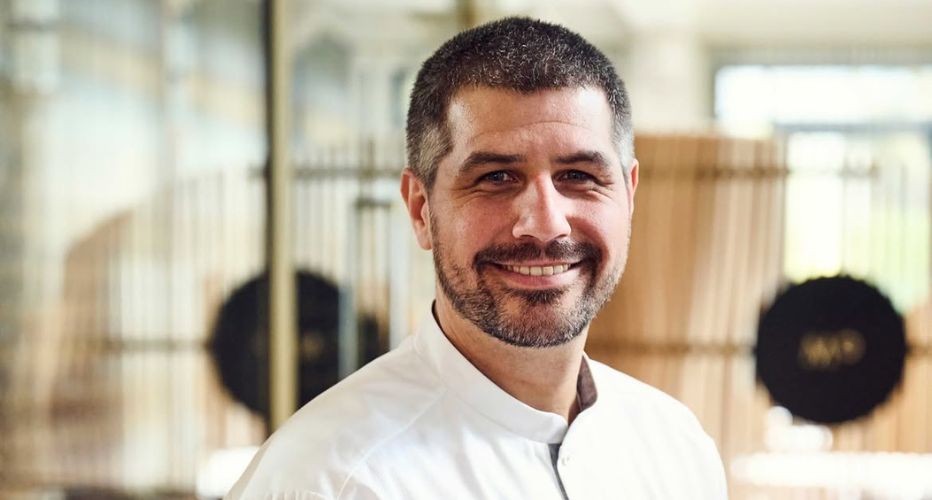
Image: Superstar chef Sven Wassmer. Source: Sven Wassmer Memories
So, style and positioning should start with the consumer occasion. Is the product for fine dining? Retail weekday drinking? Celebration? Wellness? Travel? Lunch? Younger social occasions? A business event? Once that is clear, the producer can make better decisions on sweetness, packaging, carbonation, price point, format, and communication.
The most important point is that No & Low should not be positioned as a sacrifice. It should be positioned as a choice. The consumer is not always saying, “I cannot drink.” Very often, they say, “I want another option.” That is a very different mindset.
For producers, the opportunity is not only to remove alcohol. It is to create products that expand the drinking occasion, include more people, and give consumers more freedom without making them feel they are compromising.
The biggest compliance mistake I see is assuming that “no alcohol”, “alcohol-free”, “0.0%”, “low alcohol”, “reduced alcohol”, and “dealcoholized wine” mean the same thing everywhere. They do not.
This is still one of the most fragmented parts of the category. In Europe, the regulatory framework has been evolving quite actively. The EU had already moved towards recognising de-alcoholised and partially de-alcoholised wine within the wine category, broadly following the international direction of the OIV definitions. More recently, under the new EU wine package, the language is becoming more consumer-friendly and more unified across the European Union. Instead of forcing everything into technical terms such as de-alcoholised or partially de-alcoholised wine, the EU is moving towards clearer descriptors such as alcohol-free, 0.0% and reduced alcohol, while still requiring transparency around the fact that the product has been produced through de-alcoholization.
This is a positive step because it helps the consumer understand the product more easily. It also gives wine producers more confidence to innovate within the wine category, as long as they respect the production and labelling rules. However, it does not solve the global issue.
The problem is that there is still no global legislation for No & Low alcohol wine. The EU, UK, and US do not all treat these products in the same way. A product that can sit comfortably as wine in one market may need a different descriptor, a different category name, or a different back label in another. The UK and US can be particularly challenging because the classification, labelling language, and responsibility between different regulatory authorities may not mirror the EU approach.
Then there are dry markets, Muslim-majority markets, and halal-sensitive consumers. This creates another layer of complexity. In some halal markets, it is not enough to be “low alcohol” or even legally “alcohol-free” by a general market definition. Halal certification may require a much stricter alcohol threshold, often extremely close to zero, and the full production process may also need to be reviewed. This means producers cannot assume that a standard alcohol-free wine will automatically be acceptable for halal or dry markets.
The challenge is not only the ABV threshold. It is also the ingredient list, the use of additives, stabilisers, flavourings, processing aids, terminology, and sometimes even the production method itself. An ingredient or stabiliser that is allowed in one market may not be permitted, accepted, or commercially advisable in another.
My advice to producers is simple: do not design one global label and hope it works everywhere. Start with the target markets. Decide where the product will be sold, then build the regulatory, technical, and labelling strategy around those markets.
In practice, a producer may be able to keep one front label for brand consistency, but the back label often needs to change by market. The descriptor, ingredient declaration, nutritional information, ABV wording, certification marks, importer details, and legal category may all need to be adapted. In some cases, even the formulation may need to change if a certain ingredient, stabiliser, or adjustment is not suitable for a specific market.
This is not only a legal issue. It is a trust issue. Consumers are entering the No & Low category for many different reasons: health, moderation, religion, pregnancy, driving, lifestyle, or simple curiosity. If the label is unclear or not adapted to the market, the producer risks losing consumer confidence.
So, for me, No & Low compliance should be part of the product development process from the beginning. Producers should not only ask, “Can we make this taste good?” They should also ask, “Where will this be sold, how will it be classified, what can we legally say, and will the consumer understand and trust it?”
Currently, both models are winning in different ways.
Dedicated No & Low brands often move faster. They understand the consumer, the occasion, and the language of the category. They are not carrying the emotional baggage of traditional wine. They can build around moderation, wellness, design, convenience, and new drinking rituals from day one.
Legacy producers have different advantages. They bring credibility, vineyard access, winemaking knowledge, distribution, buyer relationships, and trust. When they take the category seriously, they can help normalise it very quickly.
The problem is when legacy producers treat No & Low as a defensive line extension. If the product is there only to “tick the box”, consumers can feel that. The wine often lacks ambition. The same applies to dedicated No & Low brands. If they focus only on packaging and lifestyle but do not invest in product quality, the brand may create initial curiosity, but it will not build long-term credibility.
For me, the producers who are really winning are the ones paying attention to detail. They understand that this category requires education at every level: education for producers, winemaking teams, brand owners, sales teams, distributors, and buyers.
No & Low is still a young category. Many people in the supply chain still do not fully understand the technical challenges, the consumer segments, the regulatory differences, or how to present the product without making it sound like a compromise. A brilliant product can fail if the sales team cannot explain it. A strong brand can be misunderstood if the buyer does not know where to place it. A good wine can be dismissed if the consumer is given the wrong expectation.
So long-term, I do not think the winner will simply be “dedicated brands” or “legacy wineries”. The winner will be the producer or brand owner with the most open mind, the best attention to detail, and the strongest commitment to education.
The best future may come from collaboration: serious wine producers, strong technology partners, sensory specialists, regulatory experts, and brand builders who understand new consumers. This is not a category where one discipline can solve everything alone.
The producers who win will be those who treat No & Low as its own category with its own quality standards, not as a compromise and not as an afterthought. It needs investment, technical knowledge, brand clarity, patience, and humility. We are all still learning, but the brands that learn faster and educate better will lead the category.
[[relatedPurchasesItems-68]]
The next shift will come from several movements happening at the same time: better technology, clearer regulation, stronger category education, and new subcategories.
Technically, the sensory gap will continue to close. But for me, the future is not only about removing alcohol more efficiently. It is about protecting wine identity. In alcohol-free wine, aroma recovery is one of the most important frontiers. Alcohol removal is only one part of the process. If we remove the alcohol but lose the aromatic identity, varietal character, and sense of origin, then the product becomes hollow.
This is where advanced aroma recovery systems become very important. Technologies such as Solos are focusing not only on dealcoholization but on recovering and reintegrating the aromatic fraction in a way that helps the final wine stay closer to its varietal and terroir expression. That is where the quality conversation is moving: not simply “can we remove alcohol?”, but “can we preserve identity?”
I also think we will see more intentional base wine production. The best producers will not take a finished wine and treat dealcoholization as a final correction. They will design the wine from the beginning with the final No & Low style in mind: grape variety, vineyard management, acidity, phenolics, yeast choice, lees work, oak decisions, and texture building. The better the base wine, the less correction is needed afterwards.
Regulation will also shape the category. We still do not have one global language for No & Low. The EU is moving towards clearer and more unified terminology, but globally, the category remains fragmented. This matters because regulation affects labelling, consumer trust, export strategy, taxation, and innovation. In some markets, lower alcohol levels are becoming more commercially attractive not only because of consumer demand, but also because of alcohol duty and tax structures.
Structurally, I believe mid-strength will become much more important. Low alcohol is still a vague term, and different markets define it differently. Mid-strength wines, sitting between classic full-strength wine and alcohol-free wine, can answer a real consumer need. Many consumers are not looking for zero alcohol all the time. They are looking for moderation, lighter occasions, lower impact, and more flexibility. Mid-strength can be very relevant here, especially in markets where alcohol duty is linked to ABV.
We will also see more subcategories. No & Low is no longer one single category. It includes alcohol-free wines, low-alcohol wines, mid-strength wines, wine-based RTDs, spritzes, aperitif-style drinks, sparkling teas, functional beverages and other adult alternatives. This is where the category becomes more creative, but also more complex.
Functional beverages will be interesting, but they need to be handled carefully. If the product is positioned around wellness, energy, relaxation, adaptogens, or other functional benefits, the claims need to be credible, legal, and transparent.
I also think we may see more vineyard-driven or origin-led No & Low wines. But I would be careful with the term “low intervention” in this context. Once we dealcoholize a wine, we are already making a significant intervention. So, I would not call the final product a “low-intervention no-alcohol wine” without nuance. A better and more honest way to express it would be: “made from a low-intervention base wine”, “based on organically grown grapes”, “made from organic wine”, or “vineyard-driven alcohol-free wine.” That distinction matters because consumers deserve clarity.
For me, the biggest point is this: the future of No & Low is not really about alcohol. It was never only about alcohol. It is about relevance, choice, and identity.
Wine culture is changing because consumer behaviour is changing. People are drinking differently, choosing differently, and moving between occasions more fluidly. A consumer may want a 0.0% sparkling at lunch, a mid-strength wine during the week, a full-strength wine with dinner, and a wine-based spritz at a social event. That is not a rejection of wine culture. It is an expansion of it.
So, the question is not only, “Can No & Low copy traditional wine perfectly?” The better question is: can No & Low become credible, desirable, and relevant while still respecting wine identity?
That is where I think the future is.
What comes through across this conversation is that No & Low is no longer chasing full-strength wine — it's building its own identity, its own standards, and its own set of questions. As Eren puts it, the category was never really about alcohol; it's about relevance, choice, and staying honest to what's in the glass. For producers watching this space, that's both the challenge and the opportunity: the brands that treat No & Low with the same rigor as any serious wine category are the ones set to lead it.
In conversation with Malvika Patel, Editor and VP, Beverage Trade Network
Also Read:
London Wine Competition Unveils World-Class Judges For Landmark 10th Edition
London Wine Competition Launches Exclusive Buyer Market Intelligence Report For Entrants
The 2027 London Wine Competition gives every entrant greater feedback, transparency and commercial insight. Entrants will receive an expanded score breakdown, constructive feedback on how to improve, guidance on how to market and sell their wines, the names of the judges who tasted their entries, final feedback from the Head Judge and a Buyer Market Intelligence Report.
Enter your wines in the 10th edition of the London Wine Competition.