Early Deadline
30 November 2026
Judging
Date
22 & 23 March 2027
Winners Announcement
22 April 2027
30 November 2026
22 & 23 March 2027
22 April 2027


A wine list can contain brilliant bottles and still fail. It can be too broad, too difficult to navigate, too expensive for its audience, or simply full of wines that nobody wants to drink twice.
For Christopher Delalonde MS, the more interesting question is what happens when wine meets the realities of a working hospitality business. After more than two decades in the UK wine trade, he has seen the industry become more informed and more adventurous, but he remains focused on some deceptively simple principles: value, pleasure, drinkability and the ability to understand the person sitting across the table.
That perspective extends to details that are easy to overlook. The shape of a bottle can affect storage and service. A sommelier’s knowledge is only useful if they know when to deploy it. And a wine that deserves a place on a list needs to do more than impress once in the glass. It needs to make sense for the programme and, ideally, make someone want another bottle.
Here, Delalonde discusses what modern wine programmes need to get right, why less can sometimes deliver more, and how the best sommeliers turn knowledge into hospitality.
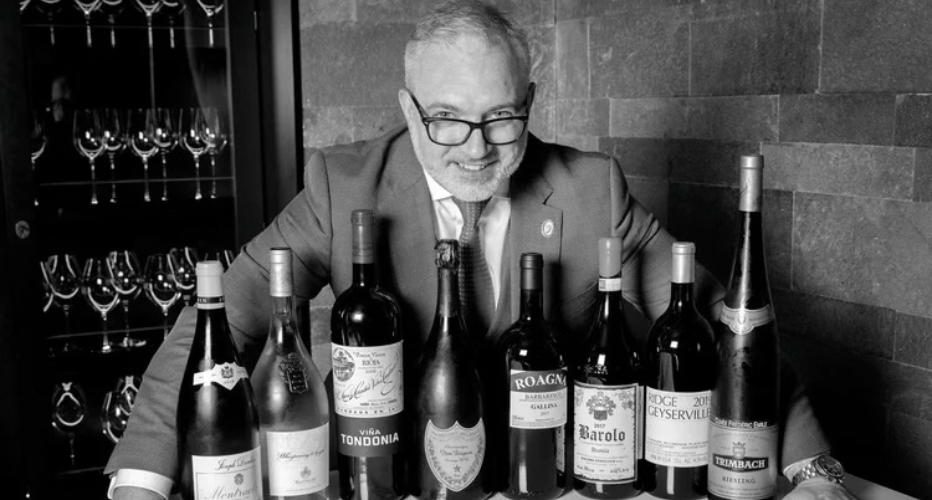
Image: Christopher Delalonde MS. Source: Perfect Cellar.
Wine programmes are like cars - they need systematic innovations, not just from trusted and/or luxury brands. Today, it seems that well-knitted, rewarding programmes (growth) and more concise offerings are the innovation - less is more in this difficult market, with a retour/undeniable need for rooted wines. The constants are the capacity or difficulty to attract talent. And your uncompromising delivery to guests.
Both sides of the coin are on display today.
1. More interesting, as sommeliers need to keep up and remain in the know, but with even more tools than ever. Also keeping an eye on the list's philosophy.
2. More difficult, as your offer has to encompass trends/regions/styles you might not be attracted to or reluctant to affiliate with.
There are many applications to the use of your knowledge; maybe not just wine knowledge but also capacity to read: guests, entire table, body language, analyse occasions, understand expectations...nothing more rewarding than when you anticipate someone's need!
Always keep the focus on what guests ask for and, then, based on your knowledge and their expectations, you have an open door to develop how and why.
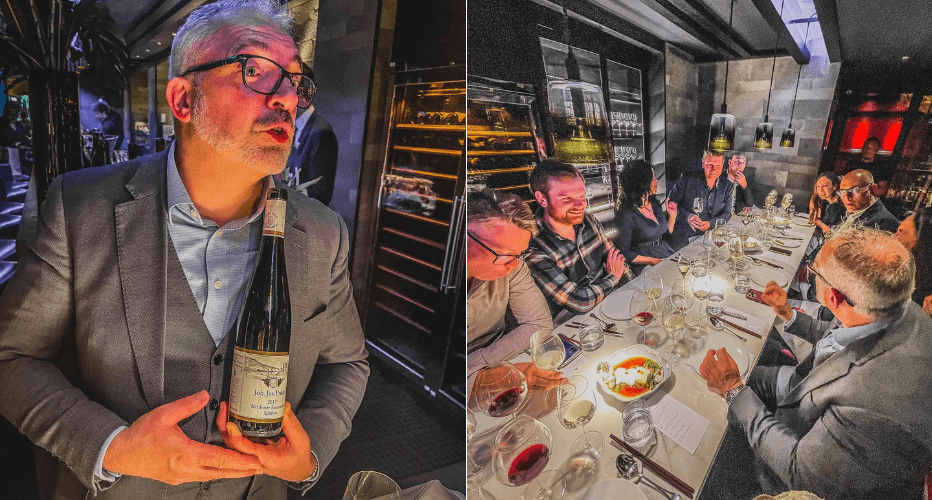
Image: The Sommelier table hosted by Christopher Delalonde MS at Hakkasan - Mayfair, London. Source: Christopher Delalonde MS.
The environment attracts and dictates the food offering as well as the standards. The core of any listing is its value - not its market value, but its capacity to deliver value for money and pleasure at any given time. Regardless of whether it's your house wine or the cellar's treasure.
A bottle of wine needs to offer drinkability. As sommeliers, we need commercial awareness - therefore the capacity to sell that second bottle at the same table. Drinkability is the link to listing and revenue.
The MS exams are proof to yourself that you can commit, be resilient, have discipline, et al. The other part is with whom...the tasting group you create/join, the binome you study with, the work team that supports your journey.
The people you meet along the way, with their own characters, techniques, experiences, life...are the foundations of your skills, as they are your own judges; developing you as a person, then - articulate you as to deliver great service in any environment and in any demanding situation: especially with guests.
And commonly, some of them remain your friends for life.
[[relatedPurchasesItems-68]]
Quality and value are and will remain the staple of any wine program. Packaging is another completely different element - linked or not - according to its route to market and positioning (Eg- trade or off-trade). Personally, I am very aware of, and adamant about, bottle shapes because they affect storage and service capacity. In today's landscape, room and space are primed for tables and paying guests - minimising storage capacity and refrigeration apparatus; therefore, I need a shape that fits within the standardised tools that I have in hand. Yet potentially compressing its identity, but who needs special shape when the product does the talking?

Image: Christopher Delalonde MS.
Astronomy...maybe one day, we will discover fossilized vine leaves on Mars?
Header Image: Christopher Delalonde MS. Source: Perfect Cellar.
In conversation with Malvika Patel, Editor and VP, Beverage Trade Network
Also Read:
What Makes a Wine Work in Luxury Hospitality?
Behind the Basket: How Ocado's Will Hill Chooses Wines for UK Consumers
The Judge's Glass: Irem Eren on Evaluating No & Low Without a Benchmark
The 2027 London Wine Competition gives every entrant greater feedback, transparency and commercial insight. Entrants will receive an expanded score breakdown, constructive feedback on how to improve, guidance on how to market and sell their wines, the names of the judges who tasted their entries, final feedback from the Head Judge and a Buyer Market Intelligence Report.
Enter your wines in the 10th edition of the London Wine Competition.