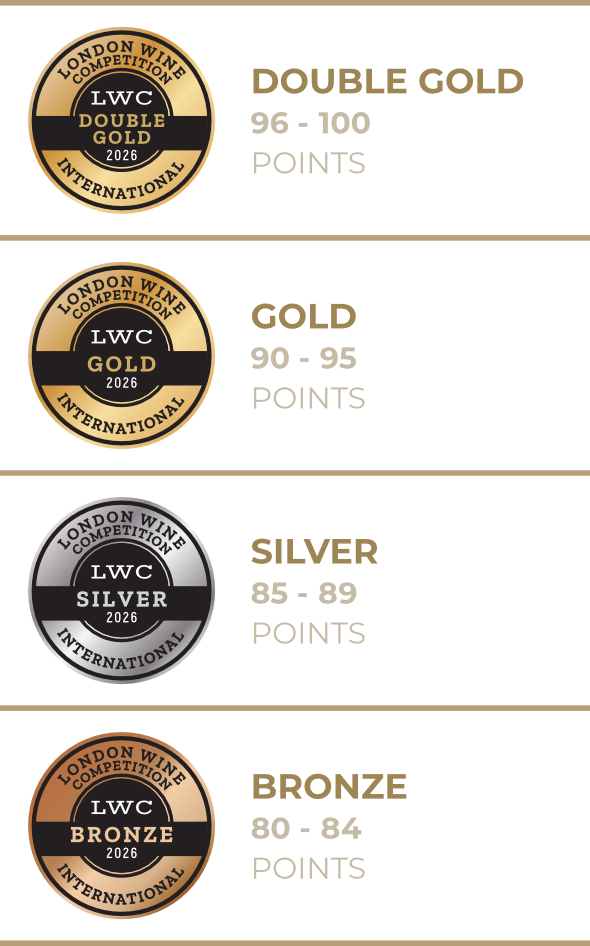
Early Deadline
30 November 2026
Judging
Date
22 & 23 March 2027
Winners Announcement
22 April 2027
30 November 2026
22 & 23 March 2027
22 April 2027

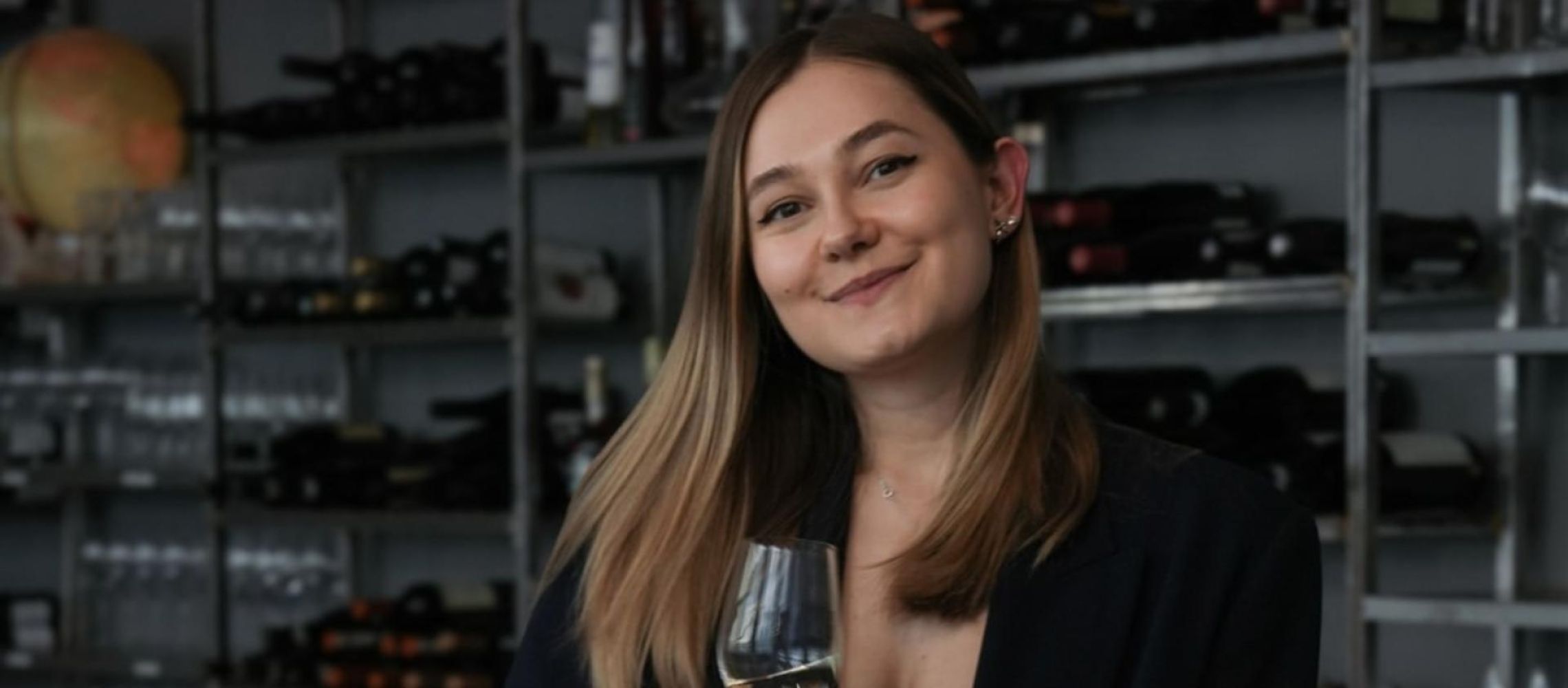
Victòria Bryksa brings together wine expertise, commercial strategy, and international market experience, shaped by more than a decade of work across Europe’s wine industry. Her career has taken her through hospitality, education, brand development, and trade-facing roles, including significant experience with Pernod Ricard across Spain, the UK, and the Nordic markets, where she worked as a Senior Wine Specialist and later as a Senior Brand Ambassador for Wine. Today, as the founder of vinojoyLABS, Bryksa works with wineries to transform production credentials and brand stories into sharper commercial narratives and practical sales tools that give distributors stronger reasons to champion their wines. A WSET Diploma holder with a distinctly international perspective, she understands how positioning, communication, market structure, and consumer expectations can determine a wine’s success. In this conversation, Bryksa shares insights into export strategy, Nordic wine markets, effective brand storytelling, and what wineries need to compete more confidently in an increasingly demanding global marketplace.
Moving between countries makes you analytical, whether you want to be or not. You compare, you extrapolate, you notice what travels and what doesn't. Wine is the same. Every market has its own character, but after a while the pattern shows up. For a wine to work commercially at scale, it has to be easy. Easy to understand, easy to remember, easy to find. Which sounds simple right up until you're the one on the supplier side trying to build it.
The wines I've seen succeed across markets were single-minded. One clear idea, no layered storytelling. The liquid should be approachable enough for a wide group of people, because if it isn't, scale probably isn't the goal you should be chasing. And they were available and visible: in enough stores, and in enough places around the consumer that they got reminded. Social, press, out-of-home, the grocer's leaflet, a friend recommending it.
The other thing those markets taught me is that the same wine needs a completely different argument depending on who's buying it. What convinces a monopoly tender panel isn't what convinces a UK multiple grocer, and neither is what convinces an independent sommelier in Barcelona. The wine doesn't change. The reason to say yes does.
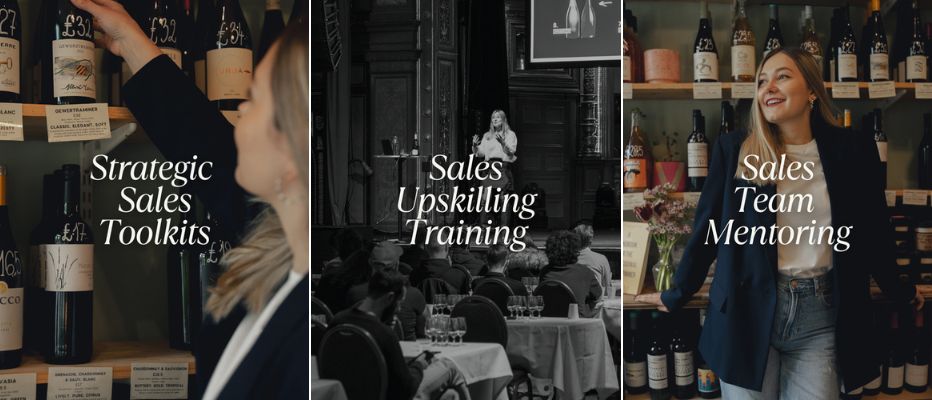
Source: vinojoyLABS
The way wineries work with distributors has fundamentally changed, and not everyone got the memo. The old model was to hand the wine over, check in occasionally, hope for the best. In 2026 the winery is at least as responsible for that wine's performance in the market as the distributor is. It's a partnership, and the producer's job is to set the partner up to win. Operationally, here's the gap. Almost everything a winery produces is aimed at the person who drinks the wine. Almost nothing is aimed at the person who has to sell it. The rep carrying your wine alongside eighty others into a meeting with a buyer who's already said no four times that morning. And the reason so many struggle in export is that wineries talk about what matters to them, which is completely understandable; it's their life's work. But it has produced a homogenised pitch where everyone leans on terroir and family history to do the selling. The buyer has heard it. What moves them is the translation: what does this wine do for their business? Does it fill a gap, strengthen a category, give them something new to say? That's the question worth answering before writing a single line of a presentation.
In the last years of my corporate career, my work was focused on exactly that: building the practical tools that help a sales team actually sell. Not the polished brand story for the consumer, but the argument a rep needs when they're sitting across from a buyer who has ten other wines to get through that morning.
That meant a few things in practice: creating sell-in material that reps would genuinely use rather than leave in the car, bringing new wines to market, and preparing wines for monopoly tenders across the Nordics. Tenders in particular teach you discipline, because the wine is tasted blind against a fixed price point; there's nowhere for the story to hide. It's just quality and value, judged cold.
Working inside a large organisation is also where you learn what a sales team will and won't do. You can build the most elegant tool in the world, but if it doesn't survive a Tuesday afternoon it's useless. That's the lesson I took with me, and it's the whole premise of what I do now.
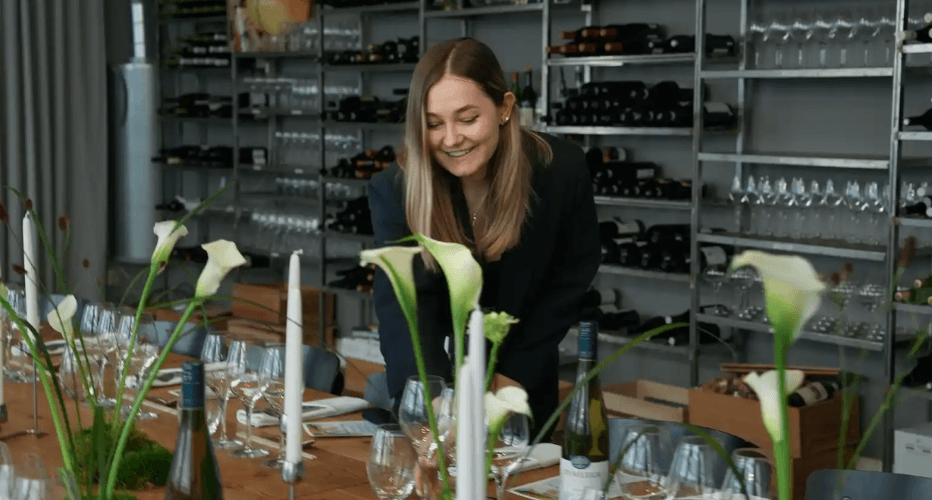
Start with the question producers usually skip: how does this wine help the distributor, and how does it help the distributor's customer? What need does it cover, and what mission does it help them deliver on? Then build the arguments in order. Lead with your strongest one, something that intrigues and shows immediate commercial value in a sentence. An existing listing is usually the best opener you have, because proof that someone else already said yes does more work than any adjective. The winery story goes last. It's a lovely close. It isn't what triggers the order. Three to five arguments, all short enough that a rep can pull one out mid-conversation without a script. The sales toolkit has largely two jobs: lowering the buyer's risk in taking the listing, or raising what they can make from it.
One caveat: these don't always make it into a sales sheet, and when they do it's in a very condensed form.
For trade, lead with the outcome. Every decision at the winery is directed at something. Talk about that rather than the decision itself. After each technical statement, ask "so what?" until you land somewhere a buyer can use it. Hand-harvested, so what? Old vines, so what? Keep going until the answer is commercial rather than descriptive.
For consumers, keep it to three things: what it tastes like, what to eat with it, when to open it. Tell them how the wine fits into their life.
[[relatedPurchasesItems-68]]
From the buyer's side, it depends heavily on market and channel. In retail, shelf standout is critical, and the buyer knows it. In on-trade, the wine is hand-sold, so the label carries far less weight. And in monopoly markets, packaging barely enters the listing decision at all, because tenders are tasted blind. Quality and value against a fixed price point are what get you through the door. Packaging matters afterwards, once the wine is on the shelf.
For the consumer, the three are inseparable. If it doesn't stand out, they don't pick it up, unless something already brought them to it, a recommendation or something they'd seen. If the price and the perceived value don't match, they don't take it to the till. And if the quality isn't there, they never buy it twice. Each of those is a hard stop, which is why you can't trade one off against the other two.
Tech sheets, price lists, and brand decks are non-negotiable; that's the baseline. But none of them help a rep walking into a customer at three o'clock on a Tuesday afternoon. So the first thing we need to think of is how to make it practical and usable. At the heart of any sales toolkit are the sell-in arguments: a USP per wine that we identify during the analysis & benchmark, split by channel (on, off & consumers). These are used by sales reps when pitching to customers, or by your customers' sales reps when they are selling to consumers.
Around those, you want the things that keep a conversation alive. An alternative and a trade-up for each wine, because no rep remembers a full portfolio and this lets them redirect instead of losing the sale. A plain style description, less marketing than a tasting note, so anyone handling the wine can place it. A contemporary food angle, because in a lot of markets food is still the number one purchase driver. Margin per wine, so the rep can orient without doing maths in front of a buyer. Then the small things that do disproportionate work at the point of sale: a shelf talker, a one-line staff pitch.
The list isn't the hard part, and I'd happily hand it to any producer. The hard part is deciding which argument leads, for which channel, in which market, and cutting the fifteen things a winery wants to say down to the three that actually move a buyer. That's where the work is.
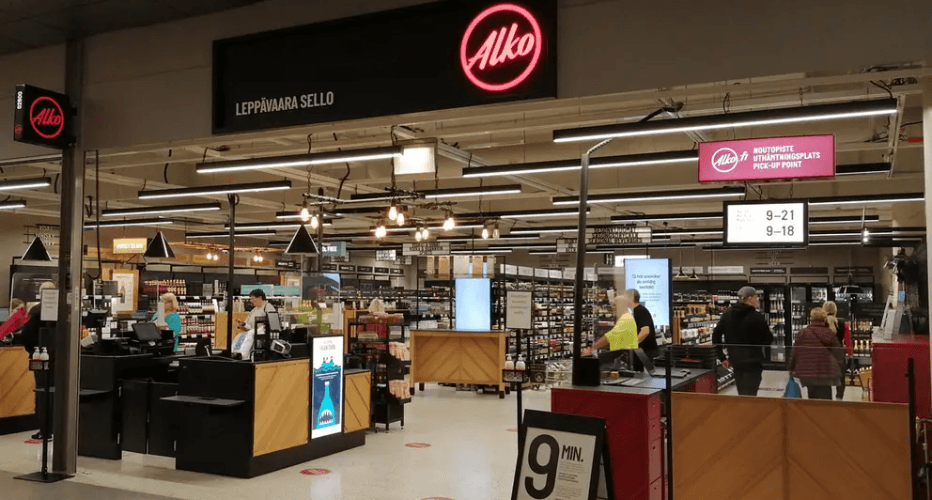
Source: The Nomad Today
It depends on the channel, and in the Nordics it especially depends on the monopoly. Sparkling wine and cava in particular have a genuinely good footprint here, which is not a given. In the UK, Prosecco has effectively become the generic name for sparkling wine. And it's more visible now because red is under real pressure: at Systembolaget in 2025 every wine category fell, but red fell hardest and sparkling held up best.
Bag-in-box is another structural fact. In Sweden it's still more than half of all wine volume and nothing on the horizon changes that. Convenience is a very hard trend to argue with.
Then natural wine, strong in on-trade for years and now steadily working its way into the monopolies, Systembolaget included. A lot of it is Pét-Nat, which closes the loop with the bubbles.
The relaxation of strict monopoly rules is on everyone's mind nowadays. It's something that in Sweden is still a while away, but there are signals in the region. About 2 years ago, Alko, the Finnish monopoly, allowed products up to 8% ABV to be sold in supermarkets (up from 5.5% ABV), and reports showed this cut into Alko's own sales volume. Another very recent piece of news is that Alko now opens on Sundays for the first time in its history (it's quite a sight to go to a Nordic monopoly on Friday afternoon; the queues are very long!). Everyone is expecting some sort of spillover effect here.
In Sweden, although still very far from this, there have been the first signals with the so-called farm sales being allowed in 2025. Before that, alcohol producers (there is a growing number of wine producers as well as other beverage producers in Sweden) couldn't sell their own products on site, and many of them didn't have them in the Swedish monopoly (Systembolaget). Now these producers can apply for a special permit issued by the municipality, but only small-scale producers are eligible. It's a very marginal gain, but it's something.
Also Read:
Andreas Rosendal MS On What Makes A Wine Stand Out Today
The Judge's Glass: Irem Eren on Evaluating No & Low Without a Benchmark
The 2027 London Wine Competition gives every entrant greater feedback, transparency and commercial insight. Entrants will receive an expanded score breakdown, constructive feedback on how to improve, guidance on how to market and sell their wines, the names of the judges who tasted their entries, final feedback from the Head Judge and a Buyer Market Intelligence Report.
Enter your wines in the 10th edition of the London Wine Competition.