Early Deadline
30 November 2026
Judging
Date
22 & 23 March 2027
Winners Announcement
22 April 2027
30 November 2026
22 & 23 March 2027
22 April 2027


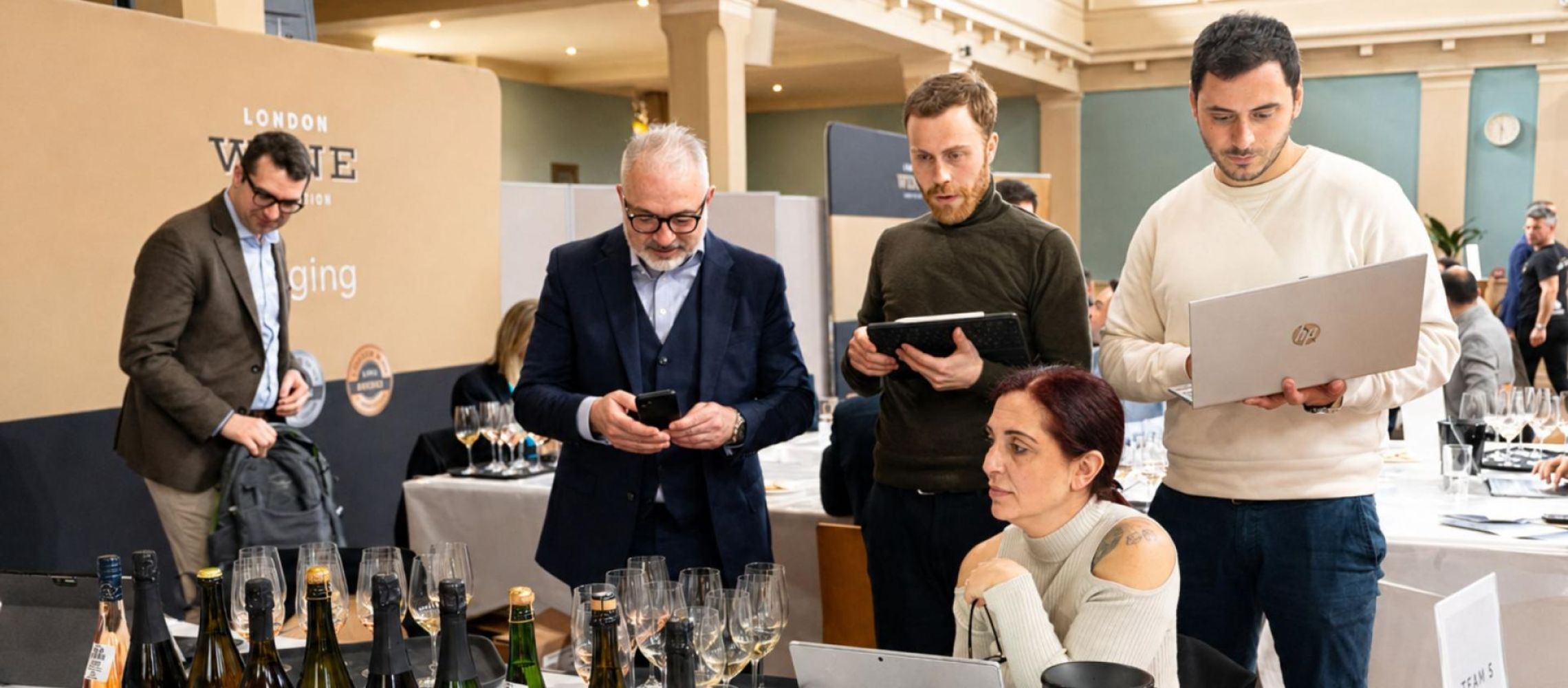
A commercially successful wine must perform in three connected ways. It must be good in the glass, deliver the right experience for its price and present itself effectively to buyers and consumers.
That is why the London Wine Competition evaluates every wine on three separate criteria:
1. Quality: How good is the wine in the glass?
2. Value: Does the wine justify its recommended retail price?
3. Packaging: Will the complete package communicate, compete and sell effectively?
These assessments are completed in a deliberate sequence. Quality is judged first and completely blind. The recommended UK retail price is then revealed so judges can assess Value. Only after the Quality and Value scores have been submitted is the complete retail package brought to the judging table.
This protects the independence of each assessment while giving entrants a commercially relevant view of how their wine may perform in the UK market.
The London Wine Competition is judged by professionals with direct experience in the UK wine trade.
Judging panels include:
- Masters of Wine
- Master Sommeliers
- Wine buyers
- Sommeliers
- Importers
- Distributors
- Retail professionals
- Other senior wine industry professionals
Every panel has a minimum of four judges and includes either a Master of Wine or a Master Sommelier. This means every wine is tasted and assessed by an MW or MS as part of its panel evaluation.
These judges regularly taste, select, purchase, import, list, recommend and serve wines. They understand wine from technical, consumer and commercial perspectives.
Each panel also has a designated Head Judge who guides the discussion, ensures different opinions are considered and helps maintain consistency across the assessment.
The London Wine Competition follows this order:
Stage 1: Quality
The wine is served blind, without its brand, producer, price, bottle, label or packaging being revealed.
Stage 2: Value
After the Quality score has been submitted, judges are shown the wine’s recommended UK retail price. The wine remains blind during the Value assessment.
Stage 3: Packaging
After the Quality and Value scores have been submitted, the blind-tasting glasses are removed, and a complete, unopened retail package is presented to the panel.
This sequence ensures that reputation, price and presentation cannot influence the initial assessment of the wine in the glass.
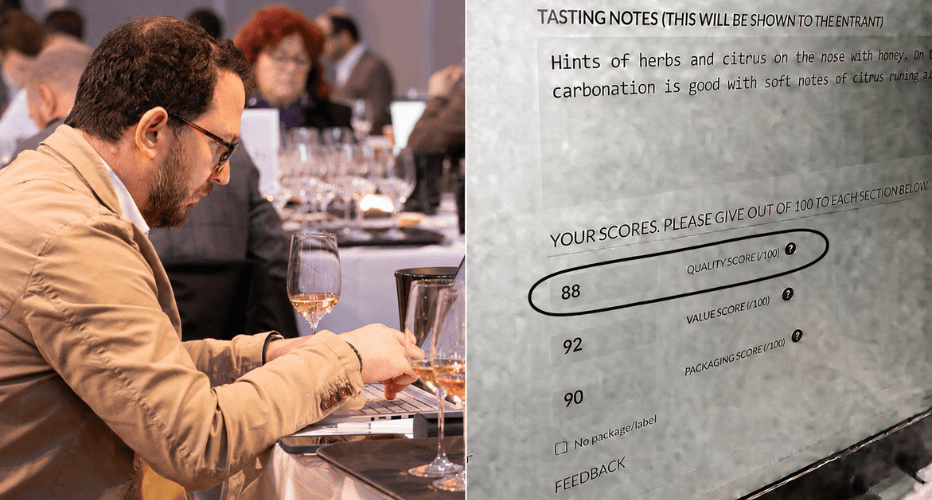
Quality is always assessed first.
Judges receive the wine in a tasting glass without seeing its original bottle, label, brand or packaging. They also do not know its price at this stage.
However, they receive enough technical information to assess it in the correct context. Depending on the wine, this may include:
- Grape variety or blend
- Country and region of origin
- Vintage
- Wine style or category
- Alcohol level
- Residual sugar
- Other relevant technical information
This allows judges to understand what the wine is intended to be without revealing its commercial identity.
A fresh, aromatic white wine should not be judged according to the same expectations as a mature, oak-aged red. Judges assess how successfully each wine performs within its declared category, origin and intended style.
Brand recognition, price and attractive packaging can influence how a wine is perceived. Blind tasting removes these factors from the initial assessment.
It creates a fair process in which every entry—from a major international producer to a small emerging winery—is first evaluated on the quality of the wine presented.
The competition is not simply asking whether a judge personally likes the wine. Judges must determine:
- How well the wine has been made
- How successfully it expresses its intended style
- Whether its components are properly integrated
- Whether it provides a complete and enjoyable drinking experience
- Whether it is appropriate for its intended consumer
Quality is not determined by one characteristic. Judges consider how several elements work together.
Appearance and condition
Judges consider whether the wine’s clarity, colour and appearance are appropriate for its variety, age, style and winemaking method.
Aroma
The judges assess the cleanliness, intensity, definition and complexity of the aromas. They consider whether the wine is fresh, expressive and free from faults.
Flavour and palate
Judges examine flavour intensity, concentration, texture and development. They consider whether the flavours reflect the aromas and whether the wine has enough depth for its intended style.
A wine does not need to be powerful to score highly. A lighter wine can perform exceptionally well when it demonstrates precision, freshness, balance and clarity.
Balance
Judges consider how acidity, sweetness, alcohol, tannin, fruit, body and oak interact.
No single component should dominate unless that characteristic is intentionally part of the style and is supported by the rest of the wine.
Structure and texture
The panel considers the wine’s framework and mouthfeel. Depending on the style, a wine may be crisp, creamy, silky, firm, rich or finely structured.
The important question is whether the structure and texture are appropriate and contribute positively to the drinking experience.
Complexity
Complexity may be demonstrated through multiple aromas and flavours, development in the glass, maturation or the integration of fruit and winemaking influences.
Complexity is considered in context. A young, fruit-driven wine may be intended to offer freshness and immediate enjoyment rather than extensive development. It can still score highly when it achieves that purpose successfully.
Typicity and intended style
Judges consider whether the wine appropriately represents its grape variety, region, category or stated style.
Individuality is welcomed, provided that the wine remains coherent, technically sound and recognisable within its intended context.
Finish
The panel assesses the length, clarity and balance of the finish. A strong finish should continue the wine’s positive qualities without introducing excessive bitterness, heat, harshness or other undesirable sensations.
Overall drinking experience
Finally, judges consider the wine as a complete experience.
Does it deliver what it promises? Is it enjoyable and well made? Are its elements properly integrated? Would its intended customer be satisfied?
Each judge enters an individual Quality score out of 100.
The panel may discuss the wine, especially when opinions differ, but every judge submits their own professional score.
The individual scores are then averaged:
Final Quality Score = Total of all judges’ Quality scores ÷ Number of judges
For example, if four judges submit:
- Judge 1: 88
- Judge 2: 90
- Judge 3: 89
- Judge 4: 87
The final Quality score is:
(88 + 90 + 89 + 87) ÷ 4 = 88.5
This average becomes the wine’s final Quality score.
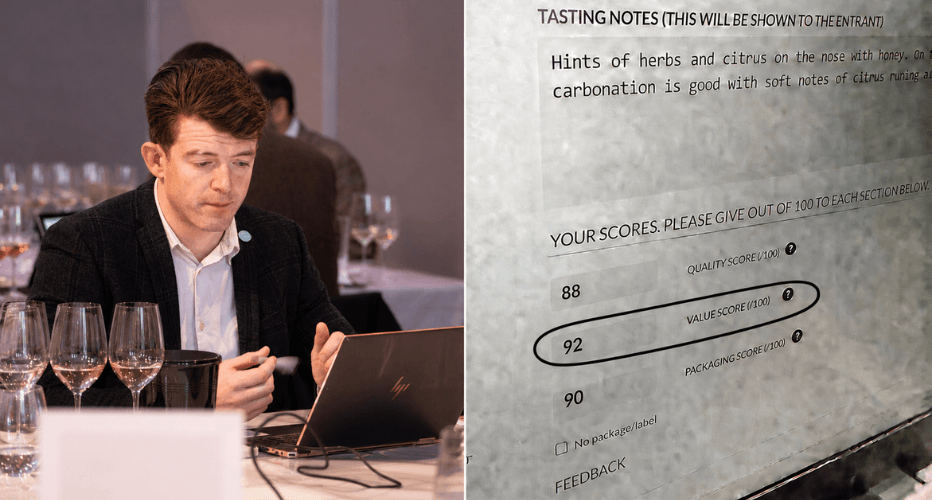
Once judges have completed and submitted their Quality scores, they are shown the wine’s recommended UK retail price.
The wine remains blind. Judges still do not see its brand, bottle, label or packaging.
They then assess whether the quality, character and complete drinking experience justify the stated price.
The Value assessment is based on the recommended UK retail price supplied by the entrant.
For wines that are not yet sold in the UK, entrants should provide the realistic price at which they expect the wine to reach UK consumers. This should reflect the product’s intended UK positioning rather than simply its cellar-door or domestic retail price.
Providing an accurate price is important because the judges are assessing the wine at that specific market position.
Value is not the same as being inexpensive.
Judges are asking:
Does this wine deliver an appropriate or better-than-expected experience at its recommended retail price?
A low-priced wine will not automatically receive a high Value score. If it lacks balance, character or enjoyment, it may still represent poor value.
A premium wine can receive an excellent Value score when its complexity, precision, provenance, structure and overall experience justify its price.
A £10 wine and a £50 wine can therefore both offer excellent value, but they must justify their prices in different ways.
Quality in relation to price
The central consideration is whether the wine’s quality justifies its recommended retail price.
A wine may offer strong value when it performs above the standard normally expected at that price. A premium wine must demonstrate sufficient quality, complexity or distinction to support its positioning.
Category expectations
Price expectations vary between categories, styles and regions.
A young, fruit-driven wine will be considered differently from a vintage sparkling wine, an aged fine wine or a wine from a prestigious appellation.
Judges assess each wine within its relevant market context rather than comparing every entry with the least expensive wines in the competition.
Intended consumer
Judges consider who is likely to purchase the wine and what that consumer would reasonably expect at the stated price.
An everyday wine should offer reliability, enjoyment and clarity of style. A premium wine may need to provide greater complexity, individuality, refinement or ageing potential.
Market positioning
The panel considers whether the price is consistent with the quality of the wine and its intended position in the UK market.
A technically sound wine may be positioned at a price that creates expectations it does not fully meet. Another wine may deliver a level of quality that makes its price particularly compelling.
Competitive relevance
The judges use their experience of buying, importing, listing and selling wines to consider whether the product offers a credible proposition alongside comparable wines in the UK market.
Overall drinking experience
Consumers ultimately experience value through what is in the glass.
Judges consider whether the wine delivers what its price promises and whether the intended consumer is likely to feel satisfied after purchasing it.
Each judge submits an individual Value score out of 100.
The individual scores are then averaged:
Final Value Score = Total of all judges’ Value scores ÷ Number of judges
The resulting average becomes the wine’s final Value score.
A high Quality score combined with a lower Value score may suggest that the wine’s price or market positioning should be reviewed. A strong Value score may indicate that the wine delivers more than judges expected at its stated price.
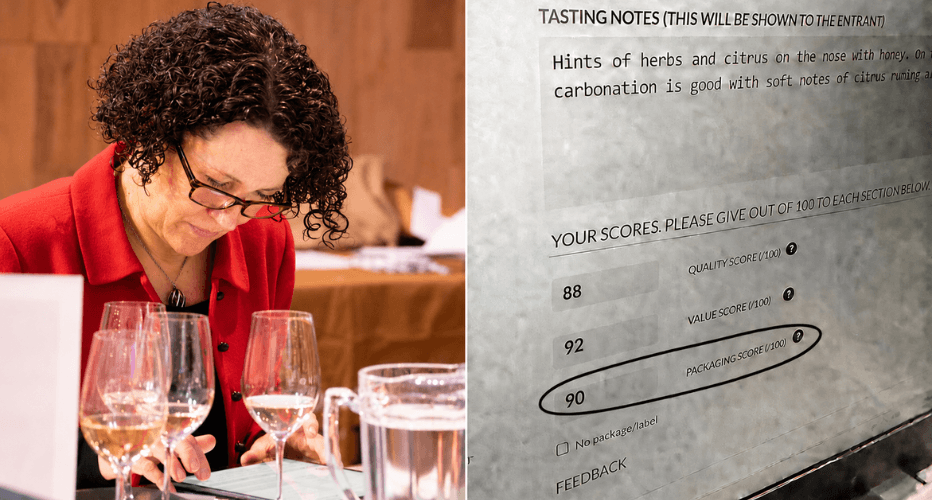
After the Quality and Value assessments are complete, each judge presses Submit Score.
Those scores are recorded before the judges see the wine’s brand or packaging. This prevents the appearance or reputation of the product from changing the judges’ earlier assessments.
The blind-tasting glasses and tray are then removed. The opened bottle used to pour the samples is not used for the Packaging assessment.
Instead, the judging team brings a separate, complete and unopened retail package to the table. This allows judges to see the product exactly as it would be presented to a buyer, retailer, sommelier or consumer.
The complete package may include:
- Bottle, can, pouch, box or other container
- Front and back labels
- Closure
- Capsule or neck design
- Brand name and logo
- Product information
- Decorative finishes
- Complete commercial presentation
Packaging is not judged from a photograph or assessed only as a piece of artwork.
Judges can stand the package on the table, pick it up, hold it, touch it, turn it around, and examine it from every angle.
They can review:
- Front-label impact
- Back-label information
- Bottle or container format
- Closure
- Shape and weight
- Materials and finish
- Typography and colour
- Branding
- Product and origin information
- Overall quality of execution
The judges assess how the complete package would perform in a real buying environment.
Immediate visual impact
Would the product attract appropriate attention on a retail shelf, wine list, marketplace or ecommerce page?
Visual impact does not require excessive decoration. A minimalist package can score highly when it is clear, confident and distinctive.
Brand clarity
Judges consider whether the brand name and producer are easy to identify and whether the visual hierarchy creates a recognisable identity.
Communication
The package should help buyers and consumers understand the wine.
Depending on the product, this may include its:
- Grape variety or blend
- Country and region
- Appellation
- Vintage
- Wine style
- Producer
- Relevant product information
The information should be clear and appropriate for the intended consumer.
Target-consumer relevance
Judges consider who the wine appears to be designed for and whether the format, visual style and language will connect with that audience.
A premium fine-wine buyer, supermarket customer, restaurant sommelier and single-serve wine consumer may respond to different visual and practical cues.
Alignment with quality
Because the judges have already tasted the wine, they can assess whether its packaging accurately represents the quality inside.
Premium-looking packaging may create expectations that the wine does not fulfil. Equally, a high-quality wine may be disadvantaged if its presentation makes it look inexpensive, unclear or poorly finished.
Alignment with price
Judges consider whether the presentation supports the recommended UK retail price.
A £10 wine does not need to look like a £50 wine, but it should still appear professional, appealing and competitive. A premium wine must create sufficient credibility and perceived value to justify its position.
Front- and back-label effectiveness
The front label should make the wine easy to notice, recognise and understand.
The back label should provide helpful information, explain the wine clearly, support its story or positioning and remain easy to read.
Both labels should work together as one complete presentation.
Shelf and digital presence
Wine is discovered in both physical and digital environments.
Judges consider whether the packaging will remain distinctive and recognisable on a crowded shelf and when reduced to a smaller ecommerce image.
Functionality
Depending on the format, judges may consider whether the package is practical to:
- Handle
- Store
- Open
- Pour
- Reseal
- Serve
- Transport
- Use in its intended consumption occasion
Judges consider whether the package gives buyers and consumers a clear reason to notice and remember the wine.
Distinctiveness may come from branding, illustration, typography, colour, format, regional cues or a confident minimalist presentation.
Finally, judges consider the complete commercial proposition.
Does the wine appear ready to present to a UK buyer? Would it compete effectively in its category? Does the package communicate what the wine is, who it is for and why someone should choose it?
The Packaging score is based on effectiveness, not production cost.
Heavy glass, embossing, foiling, or elaborate decoration do not automatically result in a strong score. These elements can support a premium product when used effectively, but they may also feel excessive or disconnected from the wine.
A simple and cost-effective package can receive an excellent score when it is clear, distinctive, practical and appropriate for its consumer and price.
The central question is:
Does this package help the wine communicate, compete and sell at its intended price?
Formats such as cans, pouches, boxes, cartons, lightweight bottles and single-serve containers are assessed according to their intended purpose.
Judges consider the relevant:
- Consumer
- Occasion
- Sales channel
- Convenience
- Functionality
- Price
- Commercial positioning
An alternative format is not expected to imitate a traditional 750ml bottle. The format itself is not treated as a weakness. What matters is how successfully the packaging performs its intended commercial role.
Each judge enters an individual Packaging score out of 100.
The individual scores are then averaged:
Final Packaging Score = Total of all judges’ Packaging scores ÷ Number of judges
For example, if four judges submit:
- Judge 1: 88
- Judge 2: 90
- Judge 3: 86
- Judge 4: 88
The final Packaging score is:
(88 + 90 + 86 + 88) ÷ 4 = 88
This becomes the wine’s final Packaging score.
Once the final averages for Quality, Value and Packaging have been established, they are combined to calculate the wine’s overall competition score.
Quality receives twice the weight of Value and Packaging:
Final Score = (Quality × 2 + Value + Packaging) ÷ 4
This means:
- Quality: 50%
- Value: 25%
- Packaging: 25%
For example, if a wine receives:
- Quality: 90
- Value: 88
- Packaging: 86
The overall final score is:
(90 × 2 + 88 + 86) ÷ 4 = 88.5
Giving Quality double weight ensures that a wine cannot succeed through competitive pricing or attractive packaging alone. The wine in the glass remains the foundation of the result.
At the same time, Value and Packaging recognise an important commercial reality: buyers and consumers consider quality, price and presentation together when deciding whether to list or purchase a wine.
After results are released, entrants can view the detailed breakdown for each wine under My Results in their Entrant Zone.
This includes:
- Final Quality score
- Final Value score
- Final Packaging score
- Overall weighted score
- Medal result, where applicable
- Constructive product feedback
- Commercial feedback
- Details of the judges who assessed the wine
Entrants also receive feedback designed to answer two important questions:
Feedback may address:
- Balance and structure
- Aromatic or flavour expression
- Oak integration
- Texture and complexity
- Finish
- Pricing perception
- Packaging communication
- Shelf appeal
- Alignment with the intended style or market
Commercial feedback may consider:
- Target consumer
- Retail or on-trade suitability
- Price positioning
- Route to market
- Shelf placement
- Distributor appeal
- Sales channels
- The strongest elements of the wine’s commercial story
This provides entrants with more than a medal or final number. It helps producers understand how experienced UK wine professionals view the wine as a complete product.
[[relatedPurchasesItems-68]]
The London Wine Competition’s judging process follows the way a wine moves through the real market.
First, the wine must perform in the glass.
Then, it must justify the price being asked.
Finally, it must communicate its identity and compete through its packaging.
By keeping the Quality assessment blind, revealing the price only for Value and presenting the complete retail package only after both scores have been submitted, the competition allows each criterion to be evaluated independently and fairly.
The result gives entrants a clear understanding of their wine’s:
- Technical and sensory quality
- Price-to-quality proposition
- Commercial presentation
- Overall market readiness
Every score answers a different question, but together they address the one that matters most:
Does this wine have the quality, value, and presentation required to succeed with buyers and consumers?
Also Read:
London Wine Competition Launches Exclusive Buyer Market Intelligence Report For Entrants
More Feedback and Transparency For Entrants At London Competitions
London Wine Competition Unveils World-Class Judges For Landmark 10th Edition
The 2027 London Wine Competition gives every entrant greater feedback, transparency and commercial insight. Entrants will receive an expanded score breakdown, constructive feedback on how to improve, guidance on how to market and sell their wines, the names of the judges who tasted their entries, final feedback from the Head Judge and a Buyer Market Intelligence Report.
Enter your wines in the 10th edition of the London Wine Competition.