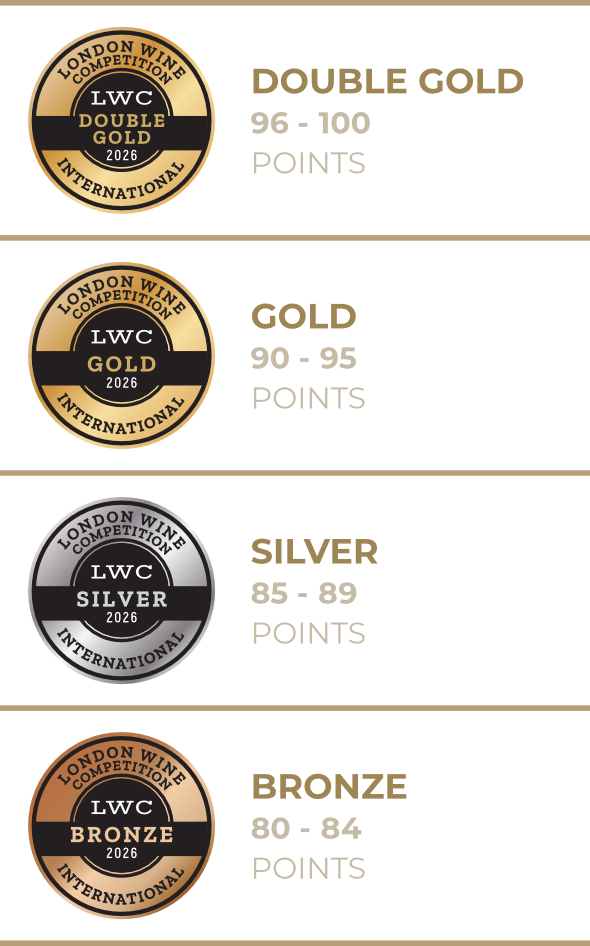
Early Deadline
30 November 2026
Judging
Date
22 & 23 March 2027
Winners Announcement
22 April 2027
30 November 2026
22 & 23 March 2027
22 April 2027
For beverage professionals, the non-alcoholic category is no longer a token section of the list. It is now a genuine revenue line, a hospitality signal, and increasingly, a test of how seriously a program takes the full spectrum of its guests. As alcohol moderation moves into the mainstream, operators are under growing pressure to offer non-alcoholic options that deliver structure, complexity, and occasion-worthiness. That is one reason sparkling tea is beginning to command real attention across both retail and on-premise channels. The real shift in 2026 is not just toward abstention, but toward discernment: guests still want ritual, complexity, and something elegant in the glass.
In the UK, high-end sparkling tea sales rose sharply over the 2024 holiday period, with some consumers using it in place of Champagne for festive toasts. It has also gained traction in “nolo” retail sets and even in supermarket chillers, where it is starting to compete with mainstream soft drinks for lunchtime consumption. The broader takeaway for the trade is clear: sparkling tea is no longer confined to the wellness aisle or a niche tasting-menu curiosity. It is crossing occasions, channels, and consumer mindsets. The opportunity is significant. A majority of adults are moderating alcohol or skipping it altogether, and sparkling tea is one of the few categories that seems capable of meeting that demand without defaulting to sweetness or imitation. Tea, after all, brings something many alcohol-free drinks struggle to replicate: tannin, texture, and a naturally food-friendly structure.
That shift is happening at the same time the addressable audience is widening. Mintel reports that 30% of U.S. consumers are actively reducing alcohol intake, while its UK research has found that 59% of adults had limited their alcohol consumption in the previous 12 months or were not drinking alcohol at all. For buyers, that matters because the commercial opportunity is no longer just Dry January or the abstaining diner at one end of the table. Moderation is becoming an everyday behavior, which means zero-proof drinks increasingly need to function across apéritif, pairing, and social drinking moments year-round.
What makes sparkling tea especially relevant to sommeliers is that it solves one of the category’s most persistent problems: texture. As Mintel’s Kiti Soininen notes, many alcohol alternatives fall short because they lack the mouth-drying, palate-shaping effect of tannin. Tea does not have that problem. Properly made sparkling tea brings tannin, acidity, and effervescence — a combination that gives it gastronomic credibility and makes it feel structurally closer to wine than to soda. Wofford makes the case in even more practical service terms: “Sparkling Tea, like Champagne, is the trifecta of food pairing assets: tannin, acidity, bubbles.” She adds, “Tea’s polyphenols help cleanse the palate, acidity brings freshness and lift, and effervescence resets the mouth for the next bite.” For beverage directors trying to build a convincing zero-proof list, that is a meaningful distinction.

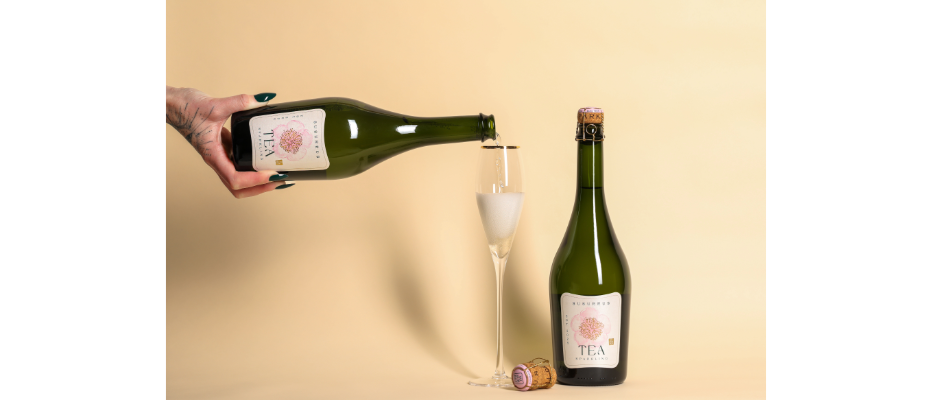
Susurrus Sparkling Tea - Osmanthus Golden Tip
That is precisely where Susurrus Sparkling Teas enters the conversation. Founded in Napa by Ellison Wofford after more than a decade in the wine business, Susurrus approaches tea with a wine-world vocabulary of site, season, cultivar, and craft. Wofford launched the brand after years spent in wine finance, winery management, and trade sales, with the aim of bringing tea into the same serious beverage frame long reserved for wine. As she puts it, “Napa taught me how to talk about an agricultural product with reverence for place, craft, and season — and I believe tea deserves that same lens.” The strongest early resonance, she says, has come in restaurants, “especially with sommeliers.” That is not incidental. “I created Susurrus with sommeliers in mind: something elegant and delicious, but also layered with story, origin, and nuance.”
The commercial proposition is not better-for-you fizz dressed up for fine dining. Susurrus is more disciplined than that. Wofford describes the range as offering “fine-wine complexity that is entirely inherent to and a celebration of the tea itself.” The bottlings are organic, single-origin, single-cultivar, and harvest-dated, with “no added juices, aromas, or flavors.” In her framing, that allows the guest to “drink a place and human craftsmanship, just like you do with a single-vineyard, single-varietal wine.” That specificity creates the kind of backstory, provenance, and production integrity that premium beverage programs need in order to justify price, drive staff enthusiasm, and earn list placement beyond a courtesy NA slot.
Just as important, Susurrus does not position itself as an imitation of wine. Wofford is explicit that she positions it “first and foremost as tea.” She continues: “I see tea as a complement and companion to wine, spirits, and all other non-alcoholic options — something that expands the diversity and size of our dinner tables, rather than dividing it.” That distinction matters. Buyers do not need another zero-proof bottle trying unsuccessfully to mimic grower Champagne or skin-contact white. They need products that can stand on their own merits, broaden guest choice, and preserve the integrity of the overall beverage program. In that sense, Susurrus may be more useful than many NA wines precisely because it is not trying to win a copycat game.
Wofford also articulates the emotional value proposition with unusual clarity. “If you’re sober, you’re not sacrificing anything with Susurrus,” she says. “Instead, you’re gaining access to the vast and expansive world of tea.” That language is commercially useful because it moves the conversation away from restriction and toward positive discovery — exactly the shift many hospitality programs are trying to make as they build more serious non-alcoholic offerings.
From a service perspective, the brand also offers clear placement versatility. Wofford describes Susurrus as suitable for “truly all the above” — apéritif, food pairing, or standalone sipping. “Elegant, floral, crisp and refreshing, Susurrus pairs beautifully with a sunset, as well as a wide variety of foods thanks to its combination of bubbles, tannins, and acidity,” she says. Products that can move across multiple dayparts and list categories are easier to train on, easier to hand-sell, and easier to keep in motion. A sparkling tea that can open a meal, pair through savory courses, and satisfy the guest who wants one elegant bottle rather than a sequence of mocktails has obvious operational appeal.
Its food-pairing case is particularly strong. Wofford’s description of sparkling tea as a Champagne-adjacent pairing tool is not rhetorical; it is grounded in mechanics. “Tea’s polyphenols help cleanse the palate, acidity brings freshness and lift, and effervescence resets the mouth for the next bite,” she says, noting that this makes Susurrus especially compelling with “rich, salty, and textural dishes.” For sommeliers, that means the product can do more than fill a non-drinker’s glass; it can participate in the same pairing logic that structures the rest of the beverage program. Wofford’s own recent example — niçoise salad, with its oily tuna, potatoes, beans, egg, and vinaigrette — underscores just how flexibly she sees the wines of tea working at the table.
The inaugural bottlings reinforce that premium positioning. Susurrus launched with two flower-scented teas: an Osmanthus Golden Tip built from organic Yunnan black tea buds scented with osmanthus blossoms from Zhejiang, and a Magnolia Oolong based on Jinxuan “Golden Lily” oolong from Fujian scented with magnolia blossoms from Guangxi. On paper alone, these read less like flavored RTDs and more like terroir-led, aromatic bottlings with genuine origin story. Wofford’s explanation of how that identity survives carbonation is telling: “Preserving terroir is less about a technique in production and more about starting with exceptional tea whose character is already vivid, confident, and complete enough to shine through.” Her role, she says, is simply “to protect that identity.” “In that sense,” she adds, “I think like a minimal-intervention winemaker: preserve site, cultivar, and the tea master’s intended expression.”
Susurrus Sparkling Tea - Magnolia Oolong
That language is likely to resonate with trade buyers because it positions sparkling tea not as a novelty format, but as a legitimate agricultural expression. Wofford goes even further: “What you smell and taste with the dried tea leaves themselves is faithfully echoed all the way through to the Sparkling Tea expression in your glass.” For a sommelier audience, that is a meaningful promise. It suggests not just flavor, but translation of origin.
There is also a broader strategic reason to watch brands like Susurrus. Traditional tea consumption may be declining in familiar formats, but tea itself is not disappearing; it is being reformatted. As NIQ’s Polina Jones told The Guardian, consumers are drinking tea differently now, whether through sparkling tea, bubble tea, kombucha, or energy drinks containing tea. That evolution creates room for premium operators to participate in tea’s reinvention before the category calcifies around mass-market cues. Hospitality has often been the proving ground for emerging beverage rituals. Sparkling tea may be one of the next important examples. Wofford describes tea as “wine’s sober sister,” but she is careful not to position the two as rivals. Tea, in her view, belongs beside wine, spirits, and other alcohol-free options as part of a more expansive table. She also sees premium ready-to-drink tea as an access point: “Ready-to-drink, premium tea like Susurrus can also be the on-ramp most need: a beautiful, approachable entry point into a much deeper tea culture.” That framing feels especially smart at a moment when the best non-alcoholic drinks are not the ones trying hardest to mimic alcohol, but the ones confident enough to offer their own experience.
For sommeliers, beverage directors, and hospitality buyers looking to future-proof their lists, that is the real signal here: sparkling tea is maturing from trend to tool, and Susurrus is arriving with the kind of category discipline that could help move it forward. Or, as Wofford puts it, “Sommeliers are engaging guides to the ‘passport in your glass.’ Susurrus gives them a compelling new medium for that kind of storytelling.”
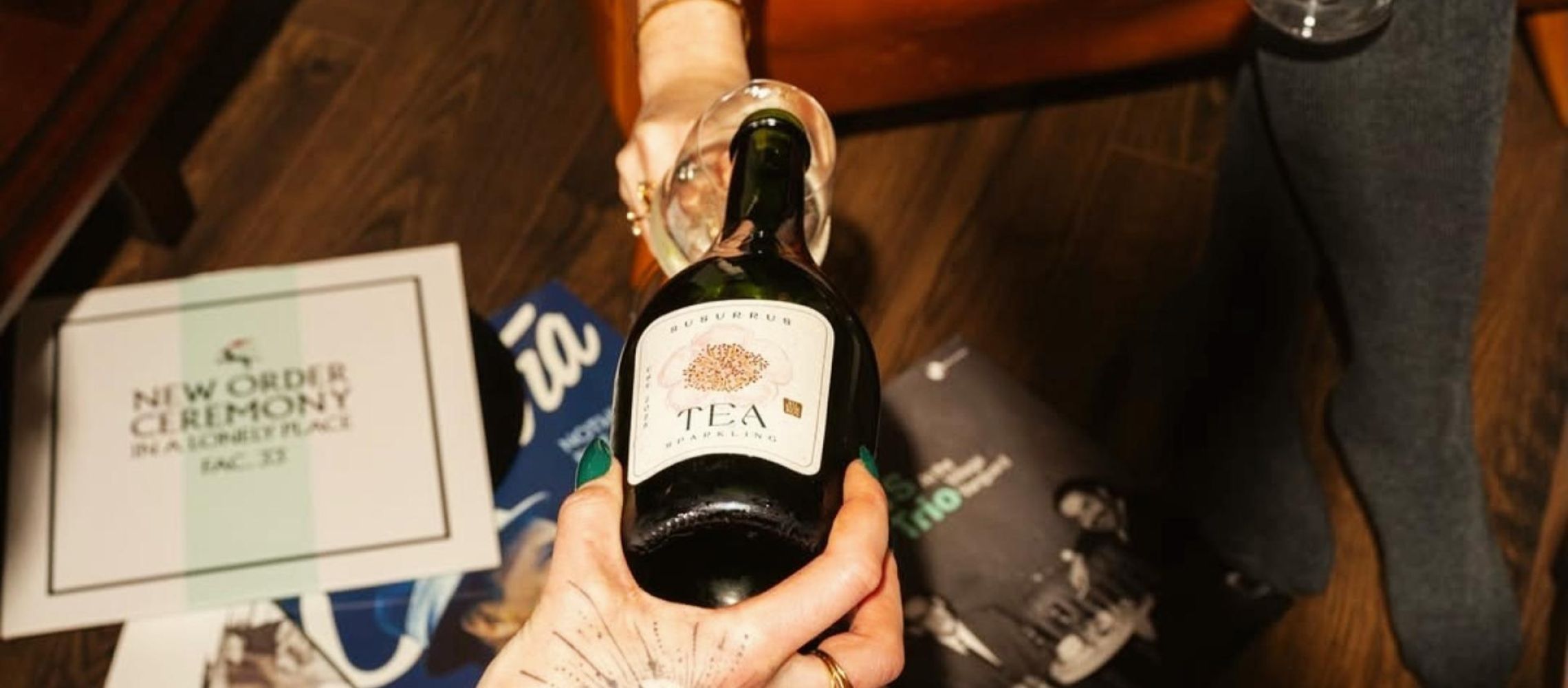
Header image sourced from Susurrus Sparkling Teas (Instagram).
The 2027 London Wine Competition gives every entrant greater feedback, transparency and commercial insight. Entrants will receive an expanded score breakdown, constructive feedback on how to improve, guidance on how to market and sell their wines, the names of the judges who tasted their entries, final feedback from the Head Judge and a Buyer Market Intelligence Report.
Enter your wines in the 10th edition of the London Wine Competition.