Early Deadline
30 November 2026
Judging
Date
22 & 23 March 2027
Winners Announcement
22 April 2027
30 November 2026
22 & 23 March 2027
22 April 2027


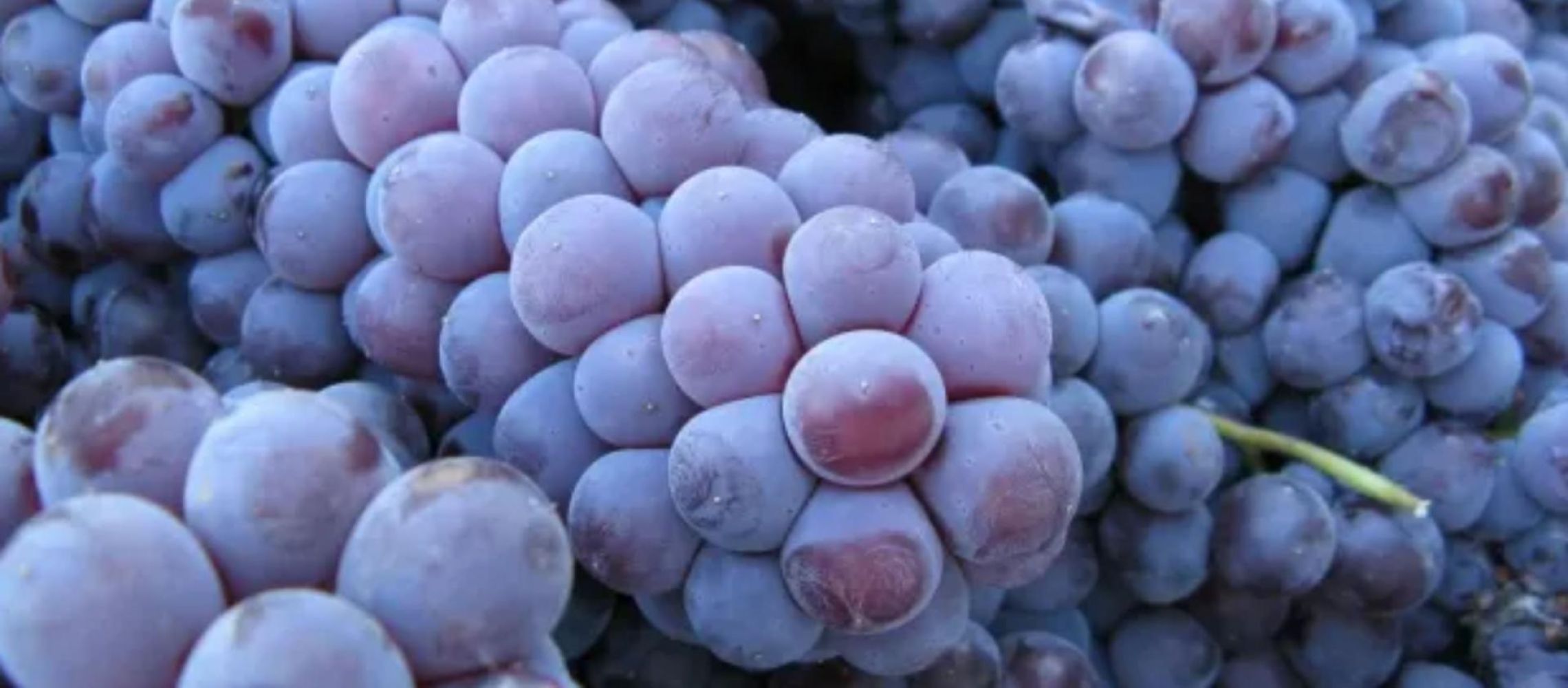
Few grape varieties are as inseparable from a place as Nebbiolo is from Piemonte. Say Barolo or Barbaresco and the grape is almost taken for granted; mention Nebbiolo from elsewhere, however, and the conversation becomes considerably more intriguing.
This is a variety with a remarkably strong sense of identity that has travelled from the Alpine valleys of northern Italy to Australia, the United States, Mexico, South Africa and New Zealand. What emerges is not simply a collection of Barolo imitations, but a fascinating question of identity: how much of what we recognize as Nebbiolo belongs to the grape, and how much to the landscape in which it has evolved?
Nebbiolo is an early-budding, late-ripening red grape with naturally high acidity and substantial tannins. Its relatively thin skins produce wines that can look deceptively delicate in the glass: translucent ruby and garnet, developing orange and brick hues with age rather than the dense purple associated with many powerful reds.
The nose tells another story. Rose petals and violets, red cherry, raspberry and red plum are classic signatures, gradually giving way to liquorice, tar, dried herbs, tobacco, leather and, with bottle age, earthy notes reminiscent of truffle and forest floor.
Few varieties combine such ethereal perfume with such formidable structure. That tension is part of Nebbiolo’s seduction — and one reason it can be so unforgiving.
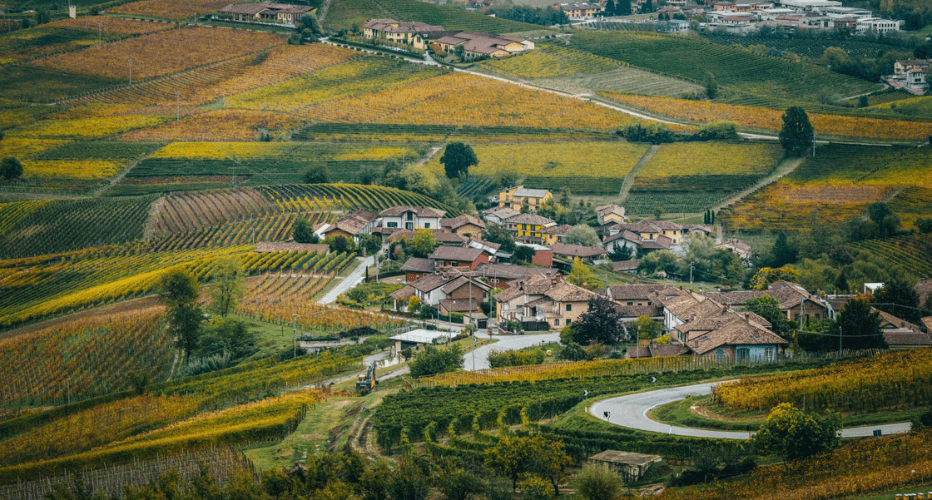
Picture: Vineyards of Elio Altare, who helped reshape the expression of Nebbiolo in Barolo, embracing innovative winemaking and barrique ageing to emphasise elegance, finesse and balance. His daughter Silvia continues the family’s winemaking legacy at their estate in La Morra.
Its name itself seems connected to northern Italy. The most widely accepted explanation links Nebbiolo to nebbia, the Italian word for fog, recalling the autumn mists that settle over the Langhe as the grapes approach their notoriously late harvest. Another theory connects the name to the whitish bloom that develops on the berries.
Whatever its etymology, its growing cycle is demanding. Nebbiolo buds early, making it vulnerable to spring frost, yet ripens late and needs a long growing season. Sugar accumulation alone is not enough: tannins, flavors and aromas must reach maturity too.
Pick too early, and the wine can feel angular and aggressively tannic; wait too long and alcohol can rise while some of the variety’s freshness and perfume begin to fade. Exposure, altitude and site selection therefore become critical.
Piemonte has spent generations learning how to bring Nebbiolo to life.
The obvious benchmarks are Barolo and Barbaresco, but even within these appellations there is no single interpretation. Producers such as Bartolo Mascarello, Giuseppe Rinaldi and Giacomo Conterno are associated with a traditional Barolo style, favoring long ageing, restrained oak and an emphasis on structure, savoury complexity and vineyard character.
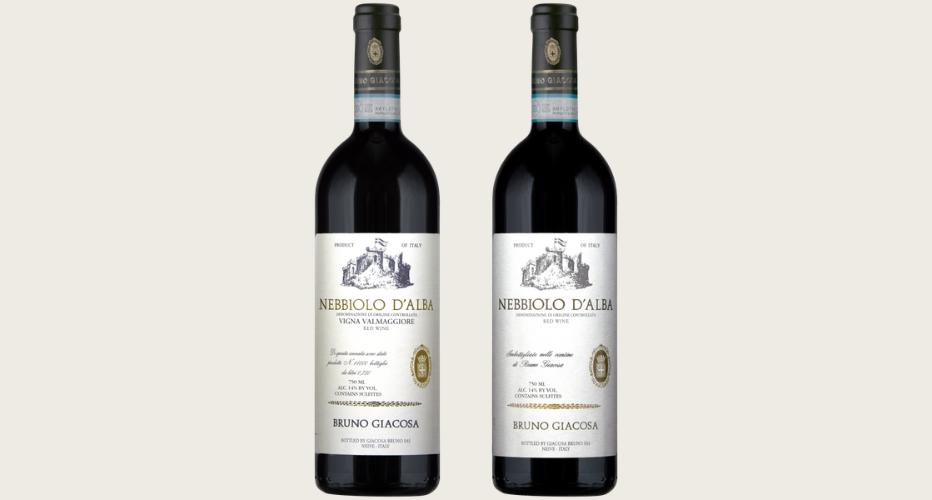
Bruno Giacosa Nebbiolo d'Alba Nebbiolo d’Alba DOC, Piemonte, Italy and Bruno Giacosa Nebbiolo d'Alba Vigna Valmaggiore Nebbiolo d’Alba DOC, Piemonte, Italy
Bruno Giacosa and Vietti have developed their own distinctive interpretations, while producers such as Elio Altare became associated with a more modern approach, including shorter maceration and greater use of new oak, producing wines that could appear richer, more polished and immediately expressive.
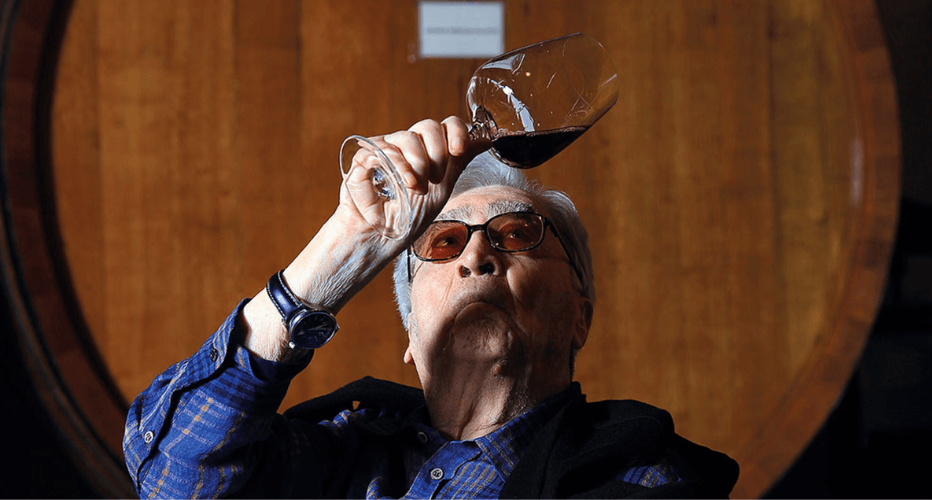
Image Source: Fine + Rare
Bruno Giacosa, the legendary Piedmont winemaker often described as an unrivaled “Nebbiolo whisperer,” died in January 2018 at the age of 88. Revered for his exceptional Barolo and Barbaresco wines, Giacosa had an extraordinary ability to identify outstanding vineyards and capture their character through restrained winemaking. His dedication to quality and respect for Nebbiolo’s distinctive aromas helped establish him as one of Italy’s most influential producers, leaving a legacy that continues to inspire winemakers and wine lovers worldwide.
The contrast shows how much stylistic range Nebbiolo can accommodate even in its homeland. It also provides a useful benchmark for understanding what happens when the grape encounters very different climates and growing conditions.
The Piemontese Nebbiolo landscape extends far beyond the famous hills of the Langhe.
There is the more approachable Langhe Nebbiolo and Nebbiolo d’Alba, while farther north the grape becomes Spanna in Alto Piemonte. In Carema, close to the Alpine border, altitude and a cooler climate give it a particularly delicate and lifted character.
Travel east towards Valtellina and Nebbiolo becomes Chiavennasca, climbing dramatic terraces along the Rhaetian Alps. Here, steep slopes, altitude and mountain conditions produce wines that can feel more linear and alpine than their Langhe counterparts.
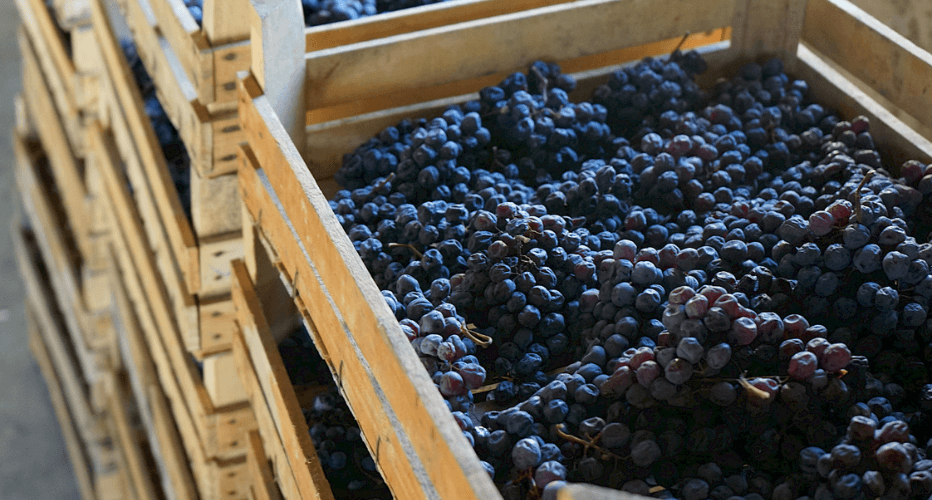
Image source: Consorzio di Tutela dei Vini di Valtellina.
Then there is Sforzato di Valtellina. Selected grapes are dried before fermentation, concentrating sugars and flavours and taking Nebbiolo towards greater richness and power.
Even within Italy, then, Nebbiolo has many accents. It can also produce rosé and sparkling wines, where its natural acidity and floral character become particularly attractive.
Unlike Cabernet Sauvignon, Chardonnay or Pinot Noir, Nebbiolo has never become a truly ubiquitous international variety. Its late ripening and exacting demands make it a risky proposition beyond its traditional territories, and results can be decidedly uneven.
Yet a handful of regions have discovered that, under the right conditions, the grape can travel. Victoria in Australia is among the most promising examples outside Italy, while California and South Africa have also produced noteworthy interpretations.
The interesting question is not whether these wines can reproduce Barolo. It is what happens to Nebbiolo when climate, growing season and winemaking change.
Australia is perhaps the most convincing international example.
Victoria, particularly its cooler north-eastern regions, has become a natural home for Italian varieties. Producers such as Castagna, Jasper Hill and Pizzini have worked seriously with Nebbiolo, exploring what the grape can do in a very different viticultural environment.
The best examples retain Nebbiolo’s floral perfume, acidity and tannic structure, but often feel more open and generous than their Piemontese counterparts. Red fruit can be more immediate, textures broader and alcohol higher, yet the variety remains recognisable.
Australia therefore offers something more interesting than a Barolo substitute: a distinctly Australian reading of Nebbiolo.
Mexico offers a very different expression. In Baja California’s Valle de Guadalupe, Nebbiolo has become one of the region’s best-known Italian varieties. The warm, dry climate can push the grape towards fuller ripeness, while Pacific influences bring cooler conditions to parts of the valley.
The resulting wines range from fragrant and vibrant to darker, richer and more powerful. They can look surprisingly far removed from Piemonte while still retaining traces of the grape’s identity.
South Africa provides another fascinating chapter. Morgenster Estate in Stellenbosch has long included Nebbiolo in its Italian Collection, demonstrating how the variety can adapt to the warmer Cape climate while retaining its combination of perfume, acidity and tannin.
Perhaps the most unexpected destination is New Zealand. In Marlborough, a region whose international identity is overwhelmingly associated with Sauvignon Blanc, Hans Herzog has cultivated a broad collection of Italian varieties, including Nebbiolo.
The results are a reminder of just how adaptable — and demanding — the grape can be.
[[relatedPurchasesItems-68]]
Some characteristics appear remarkably resilient. Floral perfume, naturally high acidity, firm tannins and a savoury dimension often survive the journey. Others are considerably more malleable: colour, alcohol, fruit profile, tannin texture and the influence of oak can change dramatically.
Put a Barolo beside a Valtellina, an Australian Nebbiolo, a Mexican bottling or a wine from Marlborough and the differences can be striking. Yet beneath them, the grape keeps leaving clues.
That tension is what makes Nebbiolo so revealing outside Piemonte. Its core personality can remain recognizable even as the wine around it changes.
Nebbiolo is not simply the grape behind Barolo and Barbaresco. Piemonte may have given it its most famous vocabulary, but it is not the only language the grape can speak.
Its journey beyond Italy shows that variety and place are inseparable but not interchangeable. The grape brings its perfume, acidity and tannin; climate, site and human choices determine how those qualities are expressed.
Perhaps, then, the wrong question to ask when tasting Nebbiolo outside Italy is: Does this taste like Barolo?
The more interesting question is:
What does Nebbiolo become when it is finally allowed to sound like somewhere else?
Written by Manuela Lo Conte DIPWSET
Also Read:
Anzivino: A Family’s Commitment to Nebbiolo in the Volcanic Hills of Gattinara
Exploring Top Performing Nebbiolo Wines from the London Wine Competitions 2024
The 2027 London Wine Competition gives every entrant greater feedback, transparency and commercial insight. Entrants will receive an expanded score breakdown, constructive feedback on how to improve, guidance on how to market and sell their wines, the names of the judges who tasted their entries, final feedback from the Head Judge and a Buyer Market Intelligence Report.
Enter your wines in the 10th edition of the London Wine Competition.